

Why does my abdomen smell? About normal smell, fishy smell and imbalance in the vagina
Did you have a mirror in your hand as a child so you could examine your abdomen?
With reasonable probability, the answer will be: No.
As a mother of both a boy and a girl, I have seen how a pee man, which hangs right there, out in the open, is examined right from the time the little ones are born. On the other hand, a girl must discover, "whoa, this is something". Although the complexity of the two is equal.
I think it's settling. Our underbelly is hidden, only for us to discover, and that can make it harder to talk about. How we look down there, how we feel, smell - but it shouldn't be like that. Let's talk openly about it, so that the normal can be wider than what we see in e.g. porn.
And the smell? Or the smell? Of course the abdomen has one.
You may, like me, have grown up with an industry that has sold us the idea that our abdomen should smell of flowers, freshness and freshly washed bed linen. Intimate soaps, deodorants and perfumed products that promise to keep us fresh down under.
But you know what? A healthy abdomen does not necessarily smell of nothing.
Your scent can change - differently during period, after sex or on a hot summer day. It may also be that you have experienced a sour smell or perhaps an unpleasant fishy smell that you don't usually have.
And then the question arises: Why does my abdomen smell like that?
Let's start with the most important thing: A mild, natural odor from the abdomen is completely normal. But a new, strong or unpleasant smell can be a sign that the bacterial balance in the vagina has changed or that an infection has occurred.
The decisive factor is not whether your abdomen smells of anything. It is whether the smell has changed and whether you experience other symptoms at the same time.
If your period underwear has started to smell, read how to easily and gently remove the smell here →
author: Cathrine Widunok Wichmand, journalist and founder - see all validated sources at the bottom of the article
How does a healthy smell abdomen?
There is no one specific scent that all healthy abdomens must have. Some experience a slightly sour smell, others a more neutral or bodily scent. The smell can also vary during the menstrual cycle.
To understand why, we must first distinguish between two parts of the abdomen:
-
Vulva is the external genitalia, including the labia and the area around the opening of the vagina.
-
The vagina, also called the vagina, is the internal channel between the vaginal opening and the cervix.
The vulva has skin, sweat glands and sebaceous glands, just like other parts of the body. Therefore, the smell from the external genitalia can be affected by, among other things, sweat, heat and moisture.
It is also normal that there is hair, that you can get pimples here, and that whitish goo can collect, for lack of better words, between your outer and inner labia.
Inside the vagina, on the other hand, there is a very special environment of microorganisms that help to protect the mucous membrane. And this is where it gets interesting.
Why can the vagina smell sour? It's all about pH and lactic acid bacteria
Your vagina is home to billions of microorganisms, including bacteria that together make up the vaginal microbiome. In many people of childbearing age, the environment is dominated by lactic acid bacteria, also called Lactobacillus.
They help maintain an acidic environment by producing lactic acid.
A typical vaginal pH in people of childbearing age is around 3.8–4.5. The acidic environment is part of the body's natural defenses because it limits the growth of certain unwanted microorganisms. Therefore, a slightly sour smell from the vagina can be completely normal.
This does not mean that you have an infection or that your abdomen is unclean.
On the contrary, the sour smell can be connected to the very biological processes that help to protect the vagina.
However, it is important to emphasize that the microbiome varies from person to person. Not all healthy vaginas have the exact same bacterial makeup or pH.
And pH also changes with age, but also from cycle to cycle due to hormones as well as your menstrual bleeding.
Why does my abdomen smell different during period?
Maybe you've noticed that your abdomen has a more metallic or bloody smell when you menstruate. It is common.
Menstrual blood contains, among other things, hemoglobin, an iron-containing protein in the red blood cells. Blood can therefore have a characteristic metallic smell.
At the same time, menstrual blood has a higher pH than the normally acidic environment of the vagina. When the blood mixes with vaginal secretions, the pH of the vagina can temporarily rise.
This can affect the bacteria's environment and help to explain why the smell changes around menstruation.
This is also why some of us experience irritation in the abdomen during certain periods of our cycle with, for example, slight itching or redness.
A different smell underneath period is not necessarily a sign of that something is wrong. But if you experience a strong fishy smell, especially together with a change in discharge, it may be a sign of bacterial vaginosis. It should be treated as it can also affect fertility.
It is also not unusual for the smell to become more noticeable when menstrual blood has been in contact with a pad or period underwear for a few hours. Among other things, moisture, blood, bacteria and the time in contact with the product play a role here.
The blood itself does not have much of an odor - but when the liquid comes out and mixes with bacteria on the skin, an odor can occur.
Menstrual products must therefore be changed regularly according to the manufacturer's instructions and according to the amount of bleeding.
Why does my abdomen smell? fish?
A distinct fishy odor from the vagina is one of the most characteristic symptoms of bacterial vaginosis (BV). Bacterial vaginosis occurs when the composition of bacteria in the vagina changes.
Normally, lactic acid bacteria help keep the environment acidic. In bacterial vaginosis, there are fewer of these bacteria, while other bacteria get better growth conditions. This means that the pH of the vagina typically increases.
Some of the bacteria produce substances, including amines, which can give the characteristic fishy smell.
Typical symptoms can be:
-
A distinct or unpleasant fishy smell from the vagina.
-
Thin, grayish or whitish discharge.
-
Odor that becomes more prominent after sex or during period.
-
Sometimes mild irritation or burning.
But not everyone with bacterial vaginosis has symptoms. About half experience no obvious discomfort.
Why does the smell get worse after sex?
Semen has a higher pH than the normally acidic environment in the vagina. When semen mixes with vaginal secretions, the pH can therefore rise temporarily.
In the case of bacterial vaginosis, it can release several of the odorants that give the characteristic fishy smell.
That is why some people find that the smell is particularly evident after intercourse without a condom.
Bacterial vaginosis is not the same as a classic sexually transmitted infection, but sexual activity can affect the risk of developing the condition.
Bacterial vaginosis can be treated, typically with antibiotics. If you experience a persistent fishy smell or a change in discharge, you should contact your doctor to find out the cause.
What else can cause a bad smell from the abdomen?
Although bacterial vaginosis is a common cause of unpleasant odor from the vagina, there are several other possible explanations.
1. Sweat and moisture around the vulva
The vulva and groin have sweat glands, and the area is often covered by underwear and clothing for most of the day.
When sweat mixes with skin bacteria, a more pronounced body odor can occur. It can especially be felt after exercise, in hot weather or after many hours in tight-fitting clothes.
It is not necessarily an odor from the vagina itself, nor is it in itself a sign of infection.
2. Sexually transmitted infections
Some sexually transmitted infections can cause changed discharge or an unpleasant smell.
Trichomonas is, for example, a sexually transmitted infection that can cause yellowish or greenish, frothy discharge with an unpleasant smell. The infection is relatively rare in Denmark.
Other infections, including chlamydia and gonorrhea, can also cause altered discharge, pain or bleeding, but can occur without symptoms at all.
Smell alone cannot therefore be used to determine whether you have a sexually transmitted infection.
3. A forgotten tampon or other foreign object
A very strong, rotten or unusually unpleasant smell can in some cases be caused by a tampon or another foreign object that has become lodged in the vagina.
It can also cause discolored discharge, irritation or bleeding.
If you suspect a forgotten tampon, it should be removed as soon as possible. If you cannot get it out, you must contact a doctor.
If you simultaneously develop a fever or become generally unwell, you must seek emergency medical attention.
4. Hormonal changes and menopause
Estrogen has an effect on the mucous membranes in the vagina and the environment in which the bacteria live.
When estrogen levels fall, for example after menopause, the mucous membranes can become thinner and drier, and the vaginal pH can increase.
It can change the vaginal microbiome and cause dryness, burning, irritation and sometimes changes in discharge or smell.
But a new, unpleasant smell should not automatically be explained as menopause. It can also be caused by an infection that requires treatment.
5. Irritation from products and excessive washing
Perfumed products, intimate sprays, douching and excessive washing can irritate the mucous membranes and affect the environment in and around the vagina.
And here we come to one of the most important points in the entire article:
You cannot wash yourself to a healthy bacterial balance in the vagina.
On the contrary, excessive washing can do more harm than good benefit.
Can fungus in the vagina cause a bad smell?
It is a widespread misconception that a bad smell from the abdomen is automatically caused by fungus.
A fungal infection in the vagina, typically caused by Candida, primarily causes other symptoms:
-
Itching and burning around the vaginal opening.
-
Redness and irritation.
-
Thick, white and sometimes lumpy discharge.
-
Soreness or discomfort during sex.
The discharge from a fungal infection is typically odorless.
If the primary symptom is a strong fishy smell, bacterial vaginosis is therefore often a more obvious explanation than fungus.
But the symptoms can overlap, and several conditions can occur at the same time. That's why it's important not to just treat yourself against fungus if you don't know what's causing the problems.
Can you smell different after sex?
Yes, and it doesn't have to be a sign of anything abnormal. Sex can temporarily change the smell from the abdomen, among other things because semen, vaginal secretions, sweat and possibly lubricant are mixed.
Semen is more alkaline than the normal environment in the vagina and can therefore temporarily affect the pH.
But if you repeatedly experience a distinct fishy smell after sex, it may be a sign of bacterial vaginosis.
If the smell is accompanied by pain, burning, bleeding or changed discharge, you should be examined.
How do you wash your abdomen correctly?
Perhaps the most surprising thing about our abdomen is how little help it really needs. The sheath is self-cleaning. The vulva is not the same way.
The vagina produces natural secretions that help carry out dead cells and other substances. At the same time, the bacteria in the vagina contribute to maintaining the protective environment.
You should therefore not wash inside the vagina. Neither with water, soap or special intimate care products. On the other hand, you can gently wash the external genitalia, your vulva.
Here are some good tips:
-
Wash the vulva gently with lukewarm water. A mild, unscented soap may be used on the outer skin if you can tolerate it.
-
Avoid washing inside the vagina.
-
Avoid perfumed intimate sprays, deodorants and vaginal rinses.
-
Change damp or sweaty underwear needs.
-
Choose underwearthat feels comfortable and doesn't hold onto heat and moisture unnecessarily.
-
Change menstrual products regularly and follow the directions for use.
And perhaps most importantly: Don't try to remove any natural scent from your abdomen. The goal is a healthy abdomen. Not a perfumed abdomen.
Do lactic acid, probiotics and intimate products help with bad odor?
It is a question that deserves a nuanced answer.
Lactic acid bacteria play an important role in the natural environment of the vagina. Therefore, there is also great interest in products with lactic acid, probiotics and postbiotics. But it is important to distinguish between different types of products and their proven effectiveness.
Products that care for the skin of the vulva are not the same as treating an imbalance or infection inside the vagina.
And although certain strains of bacteria and probiotic treatments are being studied for their possible effect on vaginal health, the evidence is not sufficient to recommend common probiotic products as a replacement for established treatment of bacterial vaginosis.
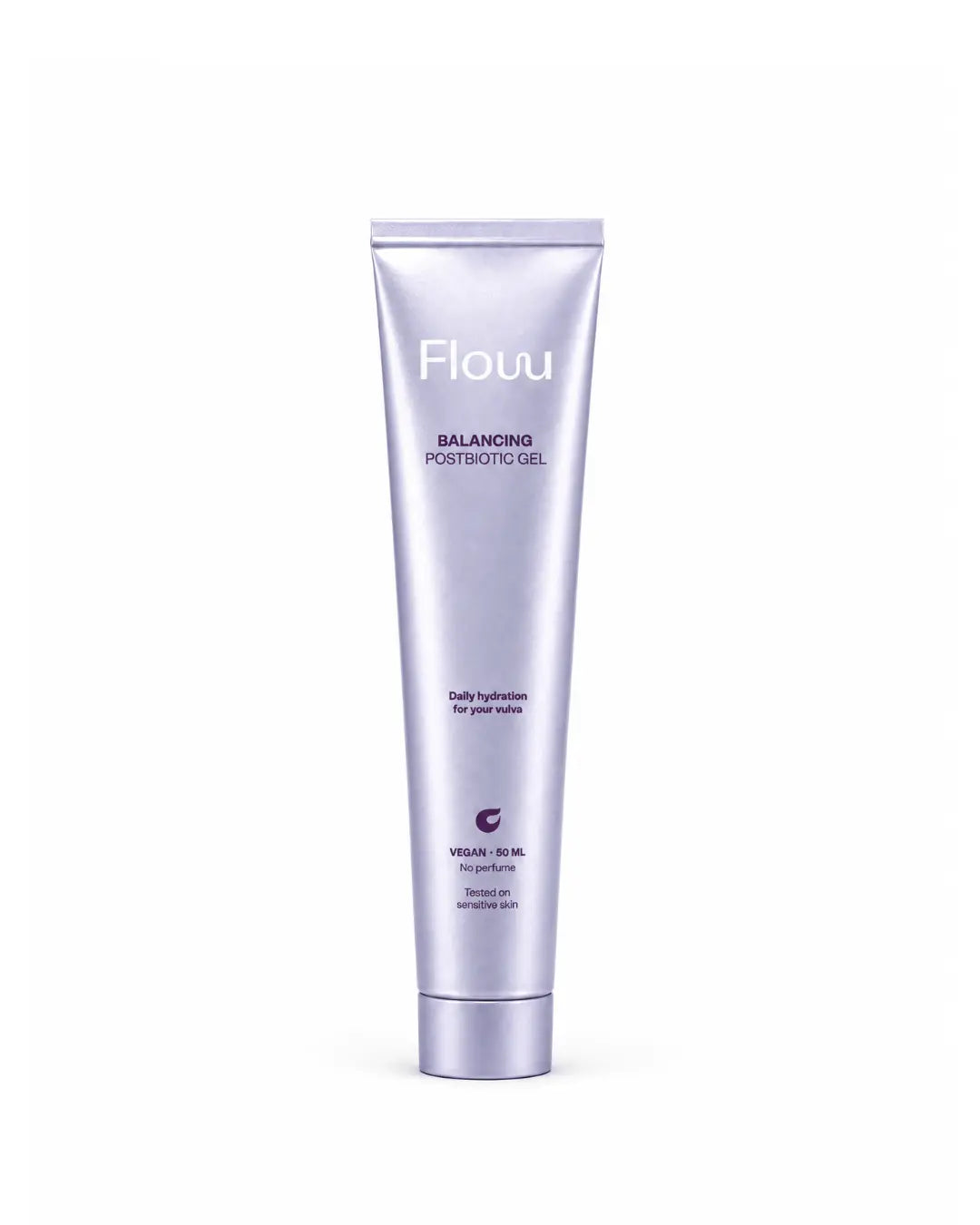
A moisturizing or soothing intimate gel may be relevant for dryness or irritation, depending on the product's properties and use.
However, if you experience a persistent fishy odor or suspect an infection, do not try to cover the odor with an intimate product.
You must know the cause.
When to contact the doctor because of odor from the abdomen?
A natural odor from the abdomen does not require treatment. But you should contact the doctor if:
-
You suddenly get a strong, unpleasant or fishy smell that is not usually there.
-
Your discharge changes color, quantity or consistency.
-
You also experience itching, burning, irritation or pain.
-
You experience pain during sex or urination.
-
You bleeding between periods or after sex.
-
The smell persists or comes back repeatedly.
-
You are pregnant and experience new, foul-smelling discharge.
Contact a doctor or emergency room quickly if you have a fever, obvious abdominal pain or feel generally unwell together with abnormal discharge.
Seek emergency help if you are seriously affected, for example in case of high fever, severe pain, fainting or suspicion of serious infection.
The doctor can examine the discharge and possibly measure the pH, take samples for infections or carry out a gynecological examination examination.
It is rarely possible to make a reliable diagnosis based on the smell alone.
Your abdomen should not smell of flowers
Perhaps it is worth repeating. Your abdomen has its own scent. It can change throughout the cycle, after sex, during period and through different life stages. And that in itself is not a problem.
We have been told for far too many years that women's natural bodily functions are something that must be hidden, corrected or washed away. But it is not your body's job to live up to an idea of how an abdomen should smell.
The important thing is to know your own normal, so that you can recognize the changes that actually deserve attention.
FAQ: Frequently asked questions about odor from the abdomen
Why does my abdomen smell even though I wash?
The abdomen has a natural scent, which does not necessarily disappear when washed. The smell comes, among other things, from the skin's sweat glands, secretions and bacteria. If you experience a new or strong fishy odor, it may be due to bacterial vaginosis or another condition that should be investigated.
Why does my abdomen smell fishy?
A fishy odor from the vagina is a typical symptom of bacterial vaginosis, where the balance of bacteria in the vagina has changed. The smell may be particularly evident after sex or around period. Contact the doctor if the smell is persistent or is accompanied by a change in discharge.
Is it normal for the vagina to smell sour?
Yes. A slightly sour smell can be completely normal. Lactic acid bacteria produce lactic acid, which helps maintain the vagina's naturally acidic environment. A sour smell without itching, pain or other symptoms is therefore not necessarily a sign of disease.
Why does my abdomen smell after sex?
After sex, the smell can change because semen, vaginal secretions and sweat mix. Semen can temporarily raise the pH in the vagina. However, a persistent or distinct fishy smell after sex can be a sign of bacterial vaginosis.
Why does my abdomen smell below period?
Menstrual blood can give off a metallic or bloody smell. At the same time, the blood can temporarily affect the pH of the vagina. It is common for the odor to change during menstruation, but a strong, unpleasant odor should be investigated.
Can bad odor from the abdomen be caused by fungus?
Vaginal fungus typically causes itching, burning and thick, white discharge, but rarely a marked unpleasant odor. A fishy odor is more often associated with bacterial vaginosis. However, it requires an assessment to determine the cause.
How do you get rid of bad odor from the abdomen?
It depends on the cause. Ordinary body odor does not require treatment, and gentle washing of the vulva is sufficient. If the odor is due to bacterial vaginosis or another infection, medical treatment may be necessary. Avoid trying to hide lingering odors with perfumed products.
Can menopause change the smell of the abdomen?
Yes. Falling estrogen levels can affect vaginal mucosa, pH and bacterial composition. It can cause changes in discharge and smell. However, a new, strong or unpleasant smell should be assessed, as it can also be due to infection.
Can probiotics help against fishy smell from the vagina?
Some probiotic treatments are being investigated for their possible effect on the vaginal microbiome, but the effect depends, among other things, on the bacterial strain and formulation. Probiotics should not be used as a substitute for documented treatment of bacterial vaginosis. If you have a persistent fishy smell, you should contact your doctor.
Sources
-
Sundhed.dk: Discharge from the vagina. Patient handbook, updated 28 November 2024
-
Sundhed.dk: Inflammation in the vagina (bacterial vaginosis)
-
Sundhed.dk: Bacterial vaginosis. The medical handbook
-
Sundhed.dk: Discharge from the vagina and Trichomonas infection
-
Sundhed.dk: Physical hygiene, good advice. Updated September 12, 2026. Updated September 4, 2026
-
American College of Obstetricians and Gynecologists (ACOG): Vulvovaginal Health
-
Sundhed.dk: Fungal infection in the vagina. Updated September 4, 2026
-
NHS: Vaginal discharge