Signe Banke: “The hardest thing is not menstruation, but the enormous coordination work you do to not bleed through.”
In connection with our campaign, White shorts are a red flag , we spoke with Signe Banke - PhD, market anthropologist and researcher into the use of menstrual products and how menstruating women relate to their menstrual blood.
Signe's research is based on three years of anthropological fieldwork, in-depth interviews and 169 photos of menstrual blood.
As a researcher, she perhaps knows better than anyone: how it feels – and how much work goes into trying not to bleed through.
Written by Simone Mervig
 That's why we asked her:
What significance does visibility have for the experience of bleeding through?
“Bleeding through visibly is a bigger problem than bleeding through not visibly. It can feel embarrassing or uncomfortable to bleed through in a way that is visible to others, and perhaps especially others you don't know or know very well and are comfortable with. And here the colors of the clothes we wear also come into play. Because there is such a big color contrast between white or other light-colored clothing and menstrual blood, it becomes extra critical.”
How does the experience of bleeding change depending on where you are?
“Bleeding through at home and in the middle of an international match on live TV are at different ends of the spectrum.
At home it is troublesome and uncomfortable and you may feel like you are losing control, but you have the opportunity to act on it in a different way. At a handball match you are in a locked situation where it may even be visible to others - your teammates, but also everyone sitting in the arena and at home on the other side of the TV screen.”
When you talk to people who are menstruating, what else matters besides the visibility and the situation surrounding the bleeding?
“Bleeding through is also about more than just the looks of others. Blood is hard to get off clothes, sheets and furniture, and it might get ruined. It takes a lot of work, for example, if you bleed through in the middle of the night and have to change the sheets and get them white again. And it’s also unpleasant to be wet from leaked blood.
So I think it's an important point that it's not just about the social and cultural context of the unpleasantness of others' views of the bleeding, but just as much about the practicality of not wanting to bleed through."
Why is it so important for many people to avoid bleeding?
“There are many reasons for wanting to avoid bleeding through. But from my research I can see that there is something fundamentally wrong with losing control of your body when you bleed through. That is why you do so much to maintain control. But it is a battle that you cannot necessarily win because you cannot predict and control all these things.”

What do you wish more people knew about having a menstrual cycle?
“This constant work, actually having a period – all this planning and trying to predict something.
You have to anticipate the amount you're bleeding, combined with how much the product you're using can absorb, combined with how it all moves in relation to each other. It's a big matrix of movements.
Combined with the movements on a handball court, not much has to go wrong before things slide past each other and you might bleed through. It's not something you just avoid."
You describe the enormous coordination work that many menstruating athletes do. What do you think is needed to help menstruating athletes - both on and off the field?
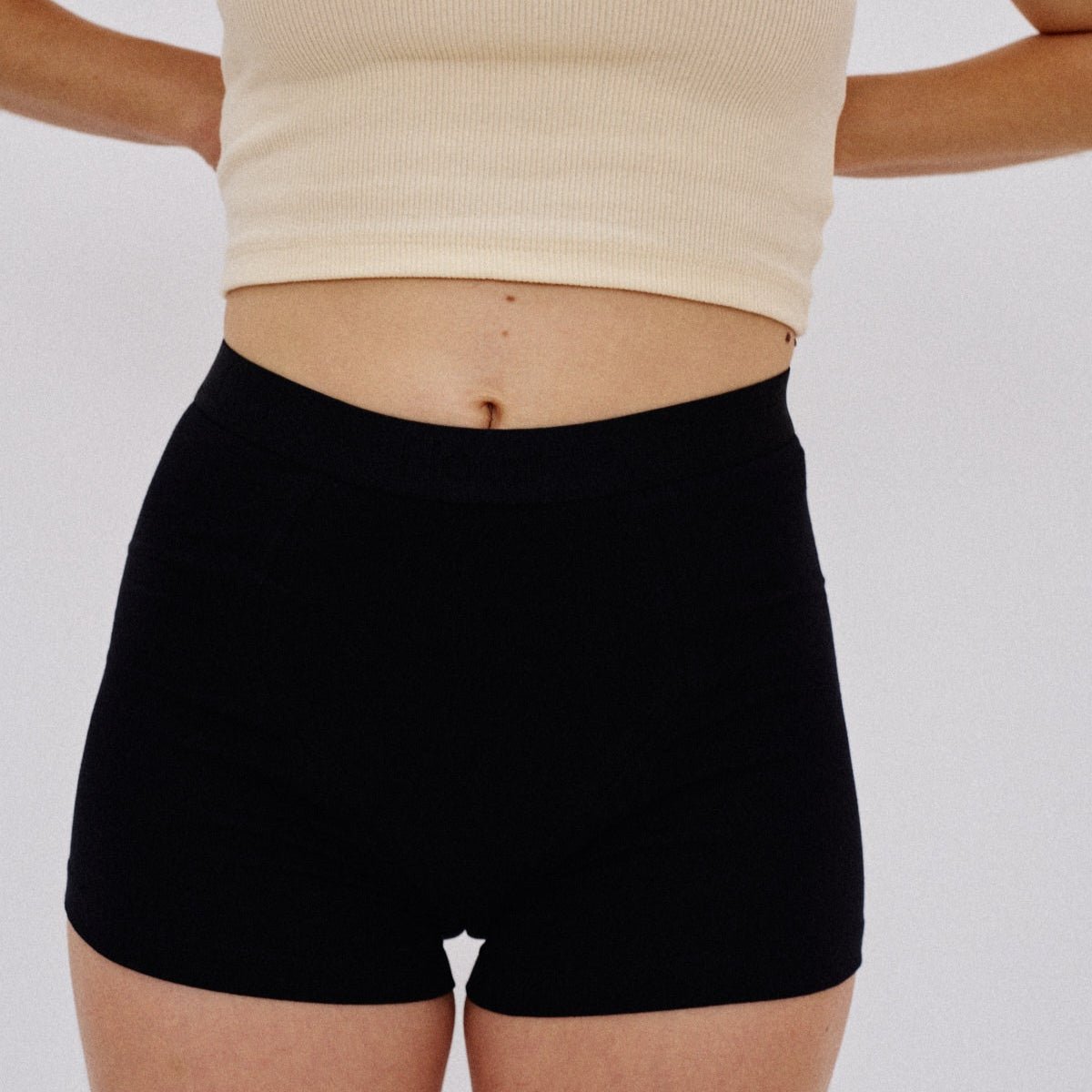
“A quick fix to help the national team would be black shorts. But I think it's important to emphasize that you can also bleed through a pair of black shorts. So you just move the boundary of where you see the bleeding. Then it might be on the bench you sit on, on a towel or on your skin.
I think the real question is: How do you make the outside world look more kindly on a public bleeding? It might point more to a need to bring all this menstrual work that all menstruating women do 24/7 during their period to light. So the first thought might not be, 'Why can't she control it?' but more 'God, it's so hard to control. How could she?'”
Signe gives us an exciting insight into all the invisible work that menstruating women do — even when they are standing in the middle of the field at an important handball match.
We hope her knowledge can help change the conversation about impregnation: From “You should have it under control” to “It makes sense that it’s hard.”
Because menstruation is never the problem.
That's the framework around it.
And we can change them. Together.