
What does lumps in equals mean period
If only we talked as openly about how our period actually looks, feels and how much we bleed, as we do about so many other things, then we would each be much wiser about our own bodies.
Because we are talking about period. Hooray! But talking about its monthly entrance fee is only half the story.
The blood is not always red and liquid. Sometimes it's dark, stringy or filled with small, jelly-like lumps.
And then you stand there in the bathroom and think: What is this?! and Is this really normal?
The short answer is yes. Small lumps during menstruation are usually completely normal. They typically consist of clotted blood and can especially occur on the days when you bleed the most.
But large or frequent lumps, a sudden stronger period or new pains may be signs that something should be investigated.
Let's take a closer look at what the lumps actually tell about your body.
authored by Cathrine W. Wichmand, founder and journalist

What are menstrual lumps made of?
Your period is more than just blood. It also consists of mucus, fluid and tissue from the uterine lining, which the body rejects when a pregnancy has not occurred.
Therefore, menstrual blood can be thin, slimy, stringy and contain small lumps.
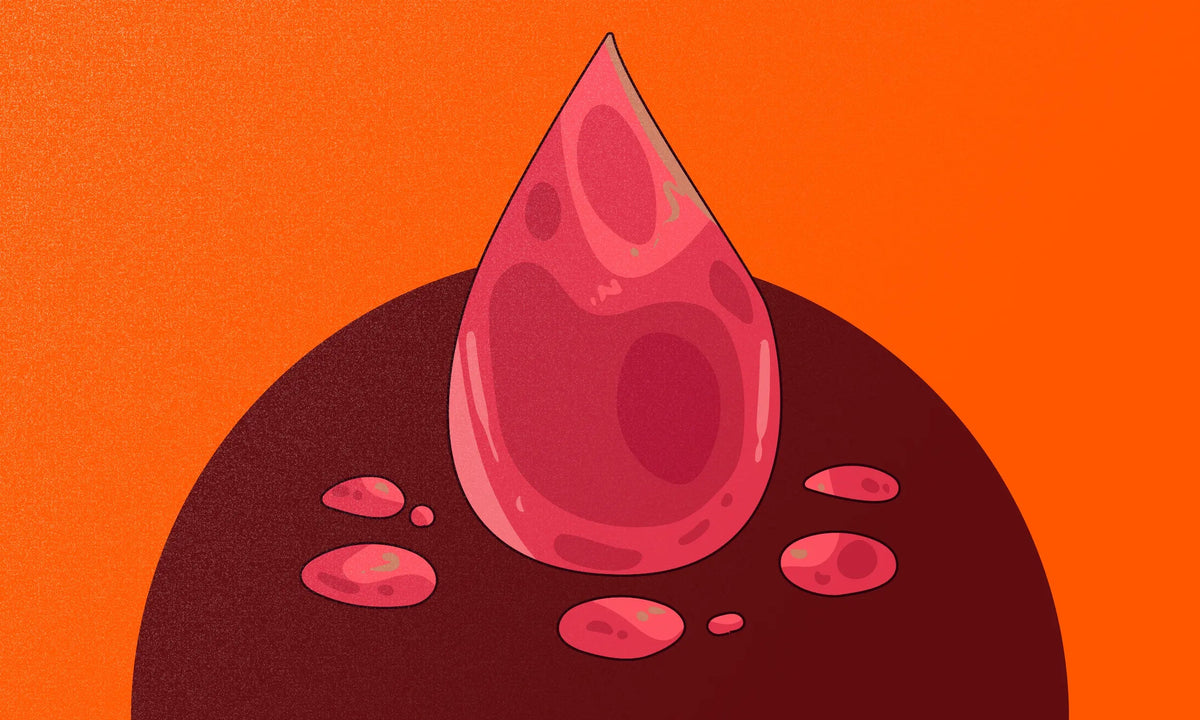
The jelly-like blood clots are called clots. It is blood that has coagulated and has collected in small or larger lumps. Clots can be pink, dark red or almost brownish. They often have a soft, jelly-like consistency and can vary in size.
Sometimes you can also see small pieces of tissue from the endometrium. It's not necessarily the same as clotted blood, although it can look similar.
Why do you get period with lumps?
Your body does something pretty crazy every cycle.
It builds a lining of the uterus that needs to be able to accept a fertilized egg. If pregnancy does not occur, hormone levels drop and the lining is rejected. At the same time, the body repairs the tissue that has bled. And then the process begins all over again.
When the uterine lining is rejected, the small blood vessels in the tissue bleed. The body limits the bleeding with the help of, among other things, platelets and the protein fibrin, which helps to form blood clots. At the same time, the body has a system that breaks down clotted blood. It is called fibrinolysis.
During menstruation, both blood clotting and the breakdown of clots take place. It is a fine balance that helps the body repel the mucous membrane and limit blood loss. Pretty genius!
But why does the blood come out in clumps?
If the blood collects before it leaves the uterus, some of it can coagulate. This can especially happen on days with heavy bleeding, when there is more blood present.
You may also have experienced that a lump suddenly appears when you get up after lying down or sitting down for a long time. This may be because blood has pooled and only comes out when you change position. Small lumps are therefore not in themselves a sign that something is wrong.
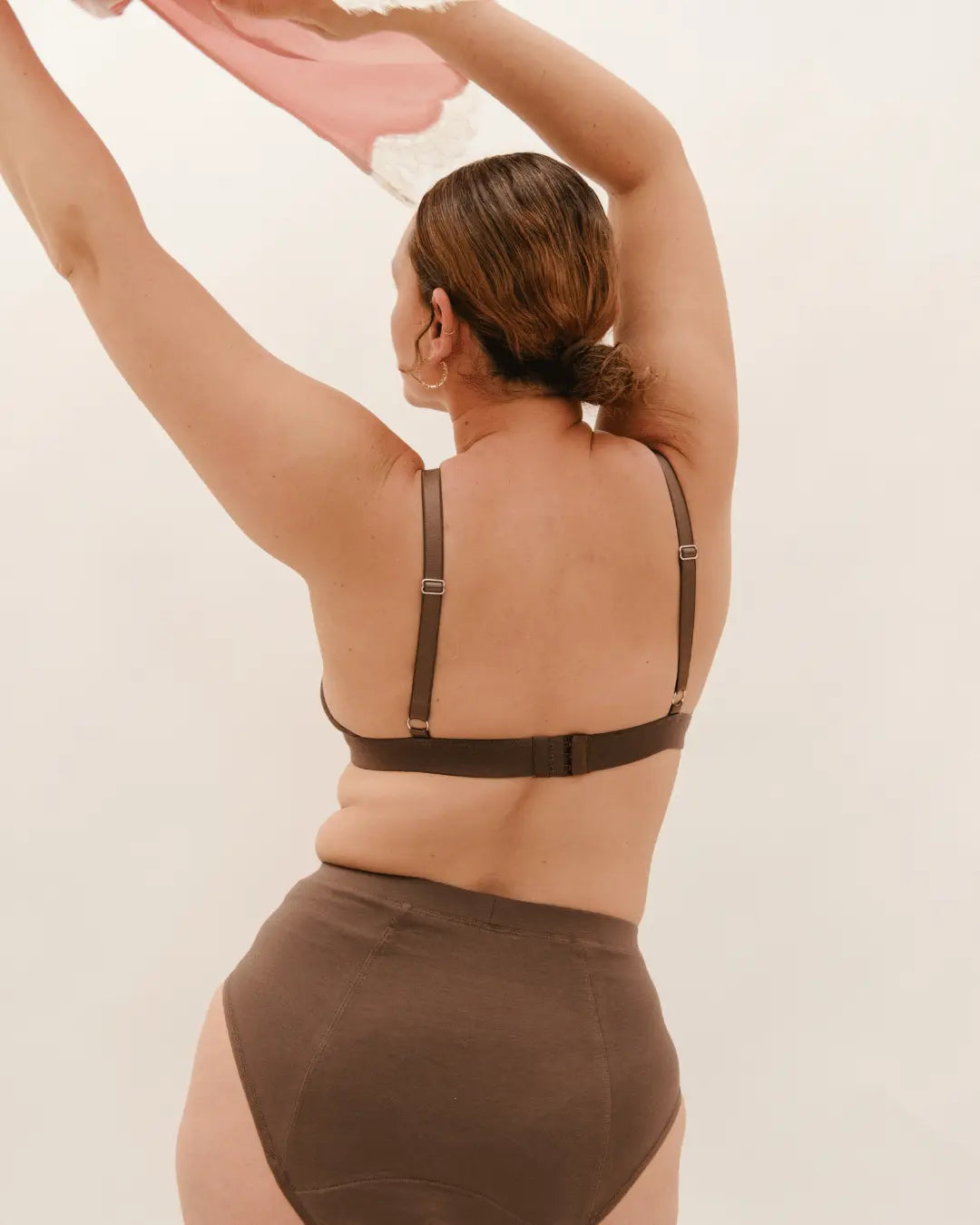
If you experience blood clots under your period, period underwear can be a good and safe solution.
What could the lump period be a sign of?
If you have always had small lumps under period, and your bleeding is otherwise as usual, there is rarely cause for concern.
But what if the lumps suddenly get bigger? Or is your period getting stronger, longer or more painful? Then there may be several possible explanations.
1. Hormonal changes
The hormones estrogen and progesterone help control how the uterine lining is built up and rejected.
If ovulation becomes irregular or does not occur, it can affect the lining and lead to heavier or irregular bleeding.
This can happen, among other things, with PCOS, in the first years after the first period or in the years leading up to menopause, also called the perimenopause.
2. Muscle nodules or polyps in the uterus
Muscle nodules, also called fibroids, are benign nodules in the muscle tissue of the uterus. Polyps are growths that can occur in the uterine lining, among other things.
Both parts can cause heavier or longer periods and thus also more blood clots.
3. Adenomyosis
Adenomyosis is a condition where tissue similar to the lining of the uterus is found inside the muscular wall of the uterus.
It can cause heavy periods, menstrual pain and a feeling of heaviness or tenderness in the lower abdomen.
4. Copper IUD or Medicine
A copper IUD can make menstruation heavier, especially in the months after the set-up. Blood thinners can also increase bleeding.
5. Bleeding disorders
Some have a congenitally increased tendency to bleed.
If you have had very heavy periods since your first period and at the same time, for example, bruise easily or have frequent nosebleeds, it is worth telling the doctor.
It is important to emphasize that lumps in themselves cannot be used to set a diagnosis. Often you also do not find one specific cause for strong period. It is the combination of symptoms and changes in your bleeding pattern that is relevant.
Do brown discharge and lumps during menstruation go together?
Yes, they can. But brown discharge and blood clots are not quite the same.
Brown menstrual blood is typically blood that has been around for a long time and has turned darker. When the components of the blood react with oxygen, oxygenation occurs, which can contribute to the color change. That is why you may experience brown or dark red blood at the beginning or end of your period.
If a small amount of blood is mixed with your normal discharge, it can look brownish.
And sometimes the brown blood can also contain small lumps.
The difference is that lumps are typically about the clotting of the blood, while the brown color is often connected to the fact that the blood has been around for a long time along the way.
The color alone therefore rarely tells much about your health. However, if you experience new or recurring brown discharge between periods, especially along with pain, a change in smell or itching, you should contact your doctor. The same is true if you bleed after sex.
Is dark menstrual blood and clots signs of stagnation?
Maybe you've heard that dark menstrual blood or blood clots are signs of stagnation. The term is used, among other things, in traditional Chinese medicine, where the color and consistency of the menstrual blood is sometimes interpreted as a sign that the blood is not moving freely.
But there is no scientific basis for using the color of the menstrual blood or the presence of clots as evidence of such a condition.
Blood can collect and clot, and blood can darken over time. These are normal biological processes and do not mean that your uterus needs to be cleaned out.
What is relevant to watch out for is especially the amount of bleeding, pain and changes in your usual menstrual pattern.
When should you be concerned about lumps during menstruation?
It is not necessarily the size of a single lump that determines whether you should react. The most important thing is whether your period has changed, how heavily you bleed and how you feel. It's the bigger picture that's important.
You should contact your doctor if:
-
You repeatedly experience large blood clots, or the clots become larger or more frequent.
-
You have to change a soaked pad or tampon every 1–2 hours, often bleed through your clothes, or have to change menstrual products at night.
-
Your period lasts more than seven days or affects your everyday life.
-
You feel unusually tired, dizzy or short of breath, which may be signs of anaemia.
-
You have new or stronger period pains.
-
You bleeding between periods or after sex.
The British health authorities, the NHS, mention blood clots larger than approximately 2.5cm as a possible sign of heavy period. Sundhed.dk mentions lumps larger than a walnut. But you don't have to stand with a ruler in the bathroom.
If your period affects your quality of life, that in itself is a good reason to seek help. And if you have bleeding or bloody, brown discharge after 12 months completely without period, it must always be evaluated by a doctor.
When should you seek emergency help?
In some cases, very heavy bleeding may require urgent medical attention. Contact a doctor or emergency room on the same day if you soak a pad or tampon every hour for several hours.
If at the same time you become dizzy, very unwell or have shortness of breath, you must seek emergency help. Call 112 in case of fainting, chest pain or signs of serious impact.
If you are pregnant or may be pregnant, it is especially important to react.
Bleeding with lumps and cramp-like pain can occur in spontaneous abortion. But lumps alone do not mean that you are about to miscarry.
Sudden, severe pain in the lower abdomen, especially on one side, can be a sign of pregnancy outside the uterus, ectopic pregnancy, in case of possible pregnancy. It requires urgent assessment, even if you are only bleeding a little. Call the emergency room immediately.
What can you do yourself if your period has changed?
You know your own period better than anyone else. And that is precisely why it can be valuable to notice when something changes.
Try to keep an eye on how many days you bleed, how heavy the bleeding is, whether the lumps change in size, and whether you also experience pain or bleeding between periods.
It can make it easier to explain your bleeding pattern to the doctor. The doctor can, among other things, examine your blood percentage and assess whether there is a need for further blood tests, a gynecological examination or an ultrasound scan.
There are several types of treatment that can significantly reduce period, depending on the cause. And remember: You don't have to be able to explain why your period has changed before you ask for help.
It is enough that it has changed, hurts or takes up too much of your life.
FAQ: Frequently asked questions about lumps during menstruation
Is it normal to have blood clots under period?
Yes. Small blood clots are common, especially on days when menstruation is heaviest. They typically consist of clotted blood. If the lumps become very large, occur frequently, or are accompanied by heavy bleeding or new pain, you should contact the doctor.
Why do large lumps come out during menstruation?
Large blood clots can occur when a large amount of blood collects and clots before it leaves the uterus. It is especially seen with heavy periods. Repeated large lumps can be associated with, among other things, hormonal changes, muscle knots or adenomyosis.
How big should menstrual lumps be?
There is no precise limit for what is normal. The NHS mentions lumps over approximately 2.5 cm as a possible sign of severe period, while sundhed.dk emphasizes lumps larger than a walnut. The size must always be assessed together with the amount of bleeding and other symptoms.
Why is my period dark red and lumpy?
Dark red menstrual blood can be blood that has been in the process for a long time. If the blood coagulates at the same time, it can form dark red, jelly-like lumps. This is often normal, but new changes in bleeding should be investigated, especially if you also have pain or bleed more heavily than usual.
Can lumps during menstruation be a sign of pregnancy or miscarriage?
Bleeding with lumps can occur with miscarriage, but lumps are not in themselves signs of pregnancy or miscarriage. If you are or may be pregnant and experience heavy bleeding, lumps or pain, you should contact the healthcare system quickly.
Is period having lumps a sign of hormonal imbalance?
Not necessarily. Small lumps can be completely normal. But hormonal changes that affect ovulation and the uterine lining can lead to heavier or irregular bleeding. It can be seen, among other things, in PCOS and in the perimenopause.
Why do I get lumps when I get up or go to the bathroom?
When you lie down or sit down, menstrual blood can pool before it leaves the body. When you stand up or go to the toilet, the blood may come out all at once, sometimes as a jelly-like lump. It is not necessarily a sign of illness.
Can you have lumps during menstruation without heavy bleeding?
Yes. Small clots can also occur in a periodwho otherwise has a normal amount of bleeding. Therefore, lumps alone do not mean that you have a powerful period. It is especially relevant to react if your bleeding pattern changes or you get other symptoms.
Sources
- Sundhed.dk: Irregular bleeding
- Cleveland Clinic: Period Blood Clots: Should You Be Concerned?
- Davies J, Kadir RA (2012). Endometrial haemostasis and period. Reviews in Endocrine and Metabolic Disorders, 13, 289–299
- Maybin JA, Critchley HOD (2015). Menstrual physiology: implications for endometrial pathology and beyond. Human Reproduction Update, 21(6), 748–761.
- Sundhed.dk: Heavy menstrual bleeding. Updated September 23, 2026
- Cleveland Clinic: Period Blood Color: What It Means
- Cleveland Clinic: Brown Discharge: 4 Causes and What It Means
- NHS: Heavy periods
- ACOG: Abnormal Uterine Bleeding.
- Sundhed.dk: Spontaneous abortion
- Sundhed.dk: Pregnancy outside the uterus
- Sundhed.dk: Heavy menstrual bleeding