
Menstrual Cramps: Why They Happen – and 5 Natural Ways to Relieve Them
For many, menstrual cramps are a constant companion when the days in the cycle app turn red. Like a little reminder from the body about what time of the month it is – in case you forgot (impossible, right?).
According to the American College of Obstetricians and Gynecologists, about 60–80% of all women experience menstrual pain at some point in their lives.
For some, it's a mild grumble.
For others, it feels like a freight train through the abdomen.
When we investigated years ago how you experienced pain during your bleeding, you mentioned that it could radiate down your thighs, you could experience pain around your rectum, and you could also experience that the pain was followed by migraines. We should talk much more about the broad symptom picture.
But even though pain is common, it's normal. And it doesn't have to be something you find yourself in. Let's first understand what's actually happening in the body.
The article is written by Emma Libner, author, vagina activist and sexologist. DIt is updated with new knowledge in 2026 by Cathrine Wichmand.

What are menstrual cramps?
Menstrual cramps, also called dysmenorrhea, occur because the uterus contracts to expel the lining of the uterus. They feel like small contractions, like during childbirth.
These contractions are caused by signaling substances called prostaglandins. The higher the level of prostaglandins, the stronger the contractions – and the more pain.
The contractions can:
-
Reduce blood flow briefly
-
Give cramps
-
Give pressing pain in the lower abdomen
-
Radiating around the lower back and down the thighs
So it's not "imagination." It's physiology.
And a bonus about the prostaglandins?
They can give you an upset stomach during your period - in English it even has its own term, period poops. You can read much more about this in the article here.
What does menstrual cramps feel like?
The intensity of menstrual cramps and where exactly they are felt can vary from cycle to cycle. The most common symptoms you may experience during menstruation are the following:
-
Abdominal cramps
-
The noise or me
-
Lower back pain
-
Pain down the legs
-
Nausea
-
Diarrhea
-
Headache
-
Fatigue
It is typically not as intense every day of the cycle, but for some the pain affects work ability, sleep, quality of life and relationships. It is a very high price to pay for having a cycle.
If regular painkillers do not help, or the pain is disabling, you should always contact a doctor. Severe pain can be a sign of, for example: endometriosis, adenomyosis or other underlying conditions.
👉 Here you can read more about what endometriosis is and why it affects 1 in 10.
5 natural ways to relieve menstrual cramps
And now we get to it: 5 ways to relieve menstrual pain naturally. That is, without the use of painkillers - but keep in mind that it works best for those with mild to moderate pain.
1. Heat – the old classic
“If it ain't broke why fix it?” The heating pad works – and there's a reason for that.
Heat islandimproves blood circulation, arelaxes the muscles,reduces cramps.
Several studies indicate that heat therapy can be as effective as mild painkillers in some cases. You can find heat in the following ways:
-
Hot bath
-
Heating patch
-
Sauna (read the article about sauna during menstruation here)
-
Thick duvet and peace (it also takes the edge off your PMS)
And calm isn't just cozy – rest helps the nervous system calm down.
2. Movement – gentle, not brutal
It may feel absurd to think about exercising when you're in pain. But gentle movement can:
-
Increase blood flow
-
Reduce tensions
-
Releasing endorphins (the body's natural pain reliever)
Yoga, stretching, gentle walks or light mobility training are enough.
It's not about pushing the body. It's about supporting it.
👉 Read more about the benefits of exercise during menstruation here.
3. Magnesium – muscle relaxing mineral
Magnesium plays a central role in your body and in the function of muscles. Low magnesium levels are associated with an increased tendency to cramps. This is also why we have developed our own body lotion with magnesium, Calming CreamMagnesium can:
-
Relax the smooth muscles of the uterus
-
Reduce prostaglandin production
-
Reduce pain intensity
Magnesium is found in:
-
Green leafy vegetables
-
Nuts
-
Beans
-
Fatty fish
-
Dark chocolate (yes!)
Magnesium can also be taken as a dietary supplement, but be aware of the different types.
4. Turmeric and anti-inflammatory diet
Turmeric contains curcumin, which has anti-inflammatory properties. Inflammation plays a role in menstrual cramps. Curcumin can:
-
Reduce inflammation
-
Reminder of the effect of mild NSAIDs
A tip: Combine with black pepper (piperine significantly increases absorption). Golden latte? Why not.
5. Aromatherapy and the nervous system
Aromatherapy is by no means hardcore medicine – but it can affect the nervous system and increase your well-being. Studies have shown that lavender oil, for example, can reduce the experience of pain in some people. You can:
-
Using a diffuser
-
Add oil to bath
-
Massaging the abdomen with diluted oil
Maybe it works. Maybe it doesn't. But calming the nervous system is in itself pain-relieving.
One last thing to consider is your menstrual product. It is not uncommon for some people to experience more severe pain when using tampons, pads, or cups.
Menstrual products that are inserted into the body can cause irritation in the lower abdomen and increase the amount of cramps as your body tries to get rid of what's bothering you.
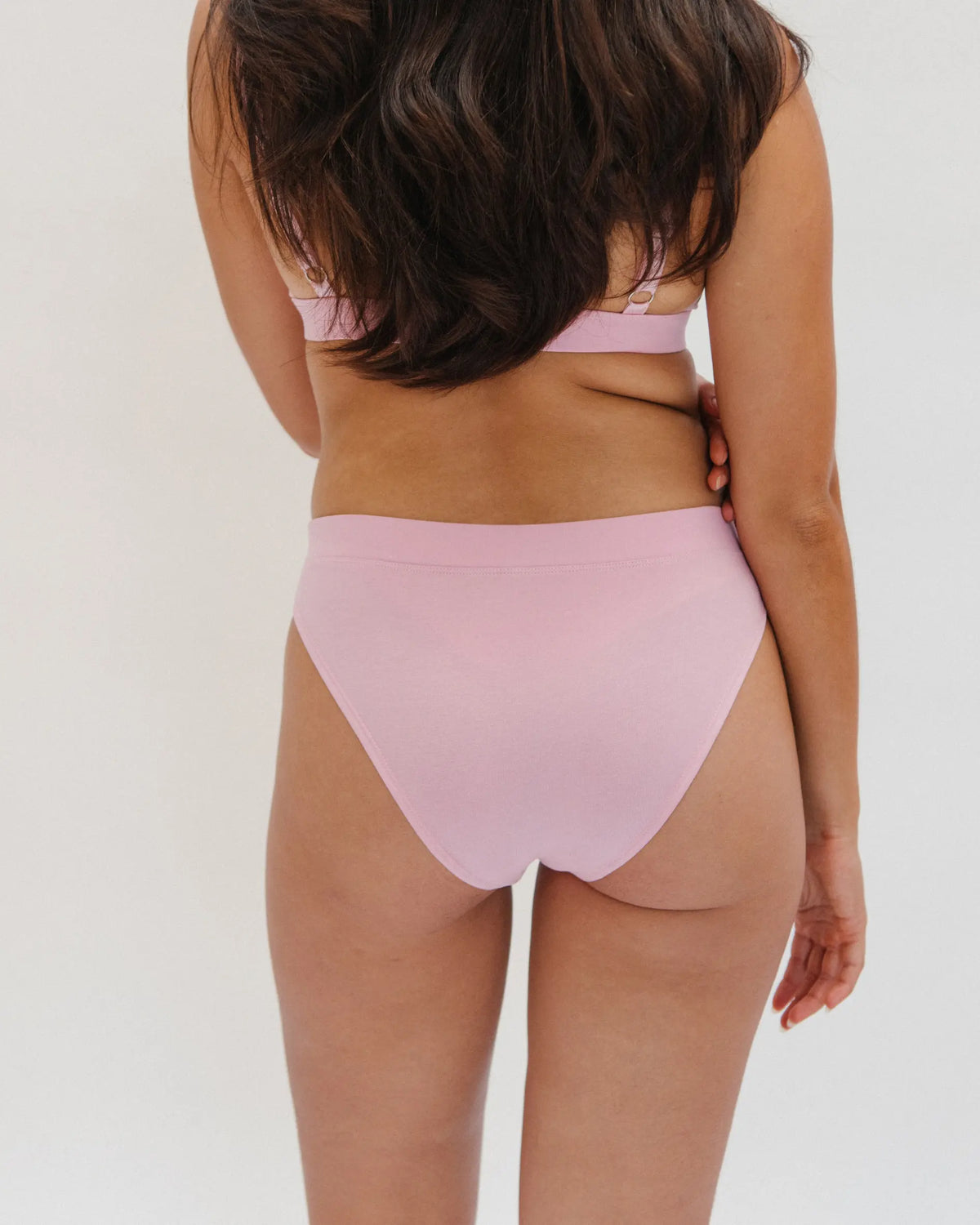
Here, menstrual panties as a non-invasive product may be a better option.
You can find our selection with three different suction capacities here.
When are menstrual cramps not “normal”?
Although many people experience pain, it is important to remember that pain should not be disabling. Do not hesitate to contact your doctor if:
-
You must report sick every month.
-
The pain lasts for several days
-
The pain worsens over time
-
Painkillers don't help
-
You experience pain during sex
-
You have very heavy bleeding.
It may be a sign of:
-
Myomer
-
Vaginal infection
The sooner you react, the better.
FAQ: Menstrual cramps
Why do you get menstrual cramps?
Due to prostaglandins, which cause the uterus to contract.
Is it normal to have a lot of pain?
Mild pain is common, yes. Severe pain should be investigated.
Do birth control pills help with menstrual cramps?
Yes, they can be, as they inhibit ovulation and reduce mucus buildup, but they should not be the first option for severe pain. In this case, the underlying causes should be investigated first.
Can diet affect menstrual cramps?
Yes. Magnesium and an anti-inflammatory diet can be effective.
Do menstrual cramps go away after pregnancy?
For some yes. For others no. Some actually experience that both ovulation pain and menstrual pain becomes more severe.