Menstruation after childbirth – when does the first period come?
Are you holding a new little one in your arms? First of all: huge, loving congratulations 💙
It's a surprising experience for most people - whether it's their first, second or third time. And one thing we may not be prepared for (like postpartum contractions - yikes, or having to deliver a placenta after giving birth - ouch), is postpartum bleeding . In the midst of all this newness, a question many weren't quite prepared for can arise: When will your period actually return after giving birth?
Because what starts as postpartum bleeding (lochia) is not the same as menstruation. And it can be difficult to distinguish between the two.
Written by Cathrine Widunok Wichmand
The content of this article has been verified by Pernille Jessen,
nurse and breastfeeding counselor behind Mamaflow

Short answer: When do you get your period after giving birth?
The first period after giving birth can come a few weeks later – or many months later, especially if you are breastfeeding. Postpartum bleeding typically lasts 2–8 weeks and is part of the body's healing process, not a period.
After birth, the uterus must heal where the placenta has been attached. This results in bleeding that gradually decreases and changes color from red to brownish and later yellowish. This is called postpartum bleeding or lochia.
When it stops, it can take time for the “real” period to return. For some, it happens quickly. For others, it only happens after many months – or when breastfeeding tapers off.
In this article we dive into:
-
What postpartum bleeding (lochia) is
-
When does menstruation typically return?
-
Whether the first period after giving birth can be heavier
-
When can you get pregnant again?
And most importantly: What is completely normal.
What is postpartum bleeding (lochia)?
In the first days and weeks after your birth, also known as postpartum, you will experience bleeding that may resemble your period. The bleeding comes from the wound where your placenta was attached to the uterus. It may come as a bit of a surprise, but it is very common. And over the weeks, the bleeding will gradually decrease and change from fresh blood to more brownish-yellow discharge - what is called postpartum discharge. A little bonus to the bleeding: You may experience a special smell from your lower abdomen during the process - it is the wound that is healing. And yes, it may seem a little... spicy.
Remember that you can talk to your health visitor or your doctor about your bleeding if you are concerned about the amount of bleeding, the freshness of the blood or have other questions. It is better to ask too much than too little. You also have a pelvic check in week 8, where you can also reverse both the bleeding and the smell.
👉 Read the article here about what you should be aware of regarding postpartum hemorrhage.
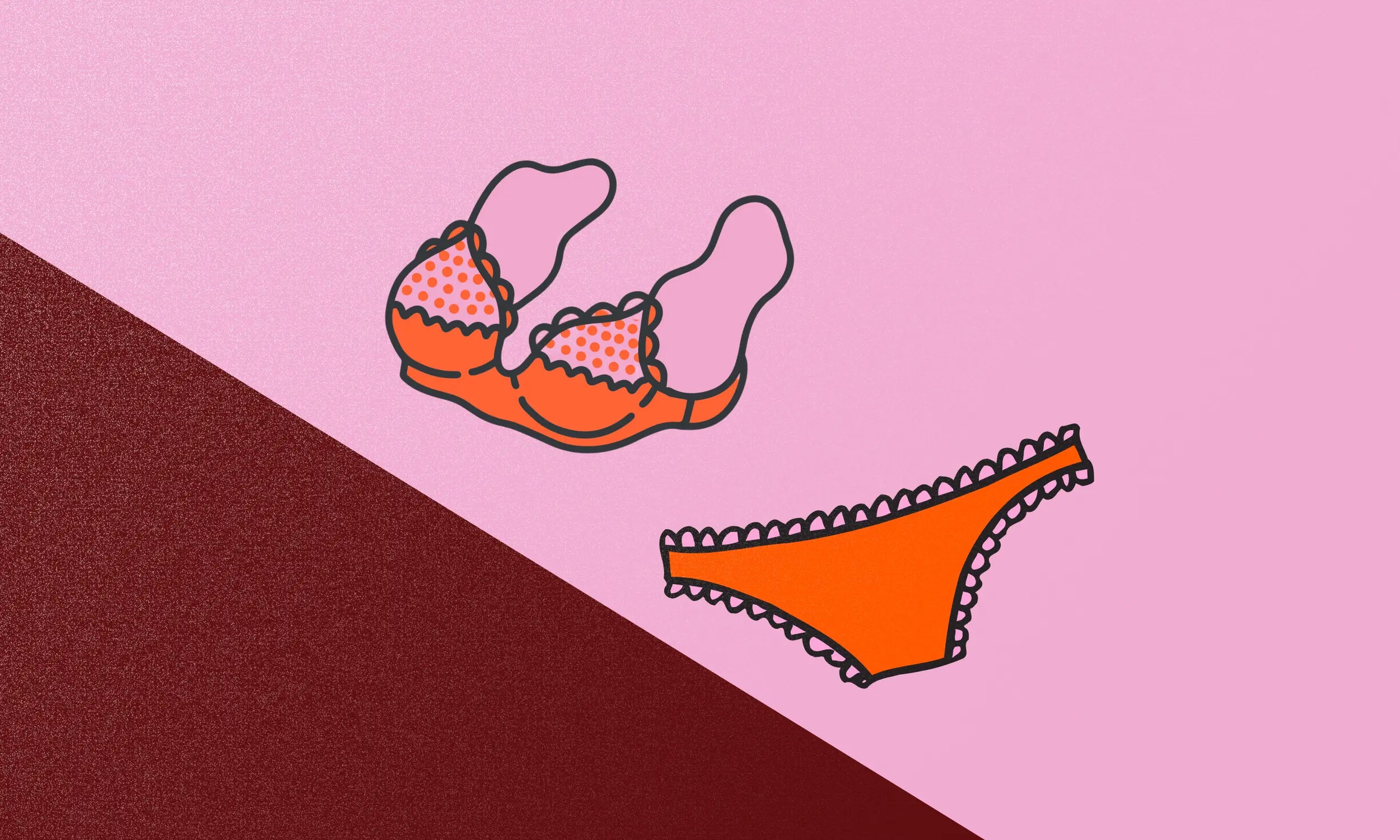
In your postpartum days, it's important to avoid tampons and menstrual cups, as the bleeding comes from a healing wound. Instead, you should use pads, diapers or menstrual panties - something you can change quickly and easily as needed. It's the most hygienic. And it's also nice to wear on top of what your lower abdomen has been through.
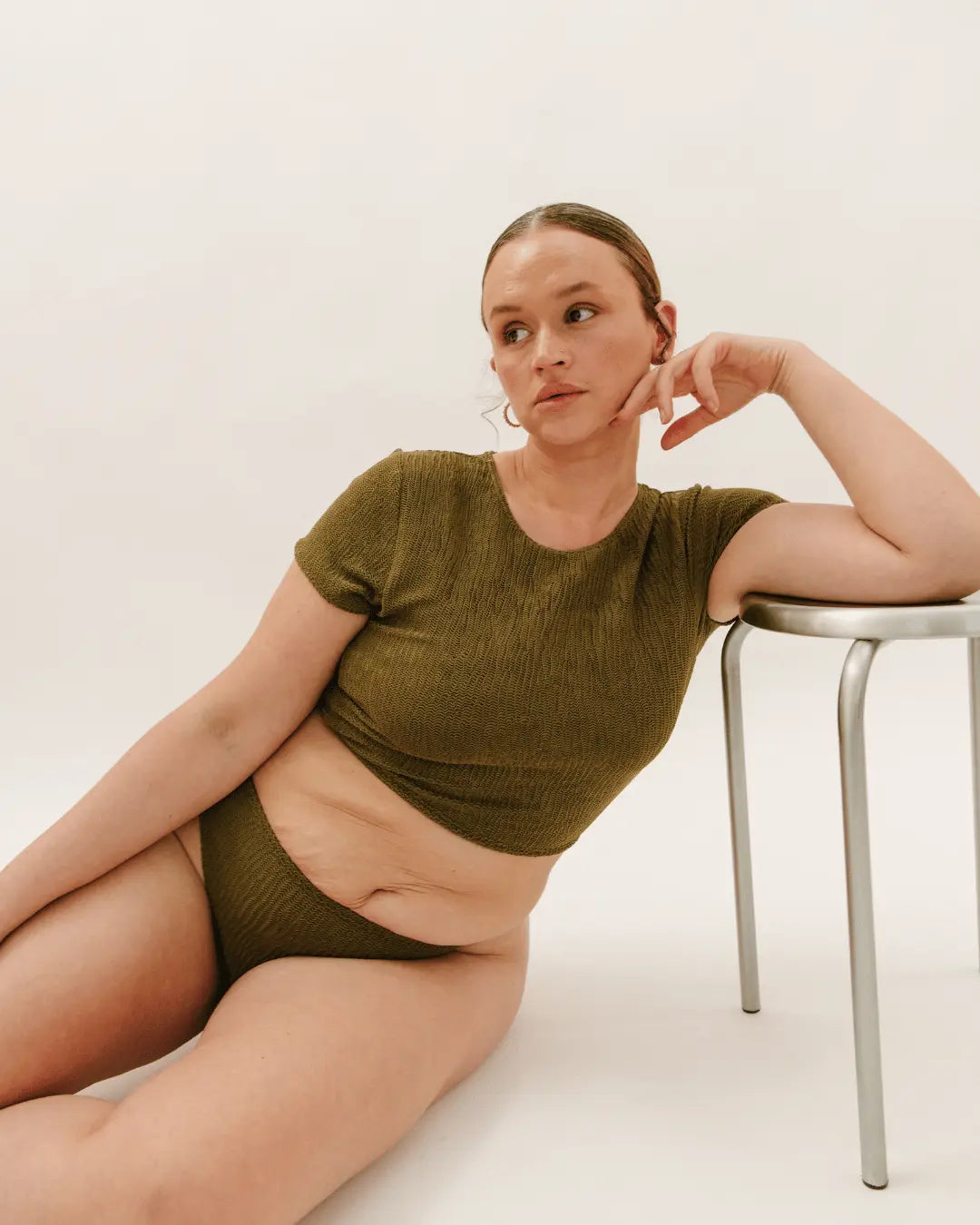
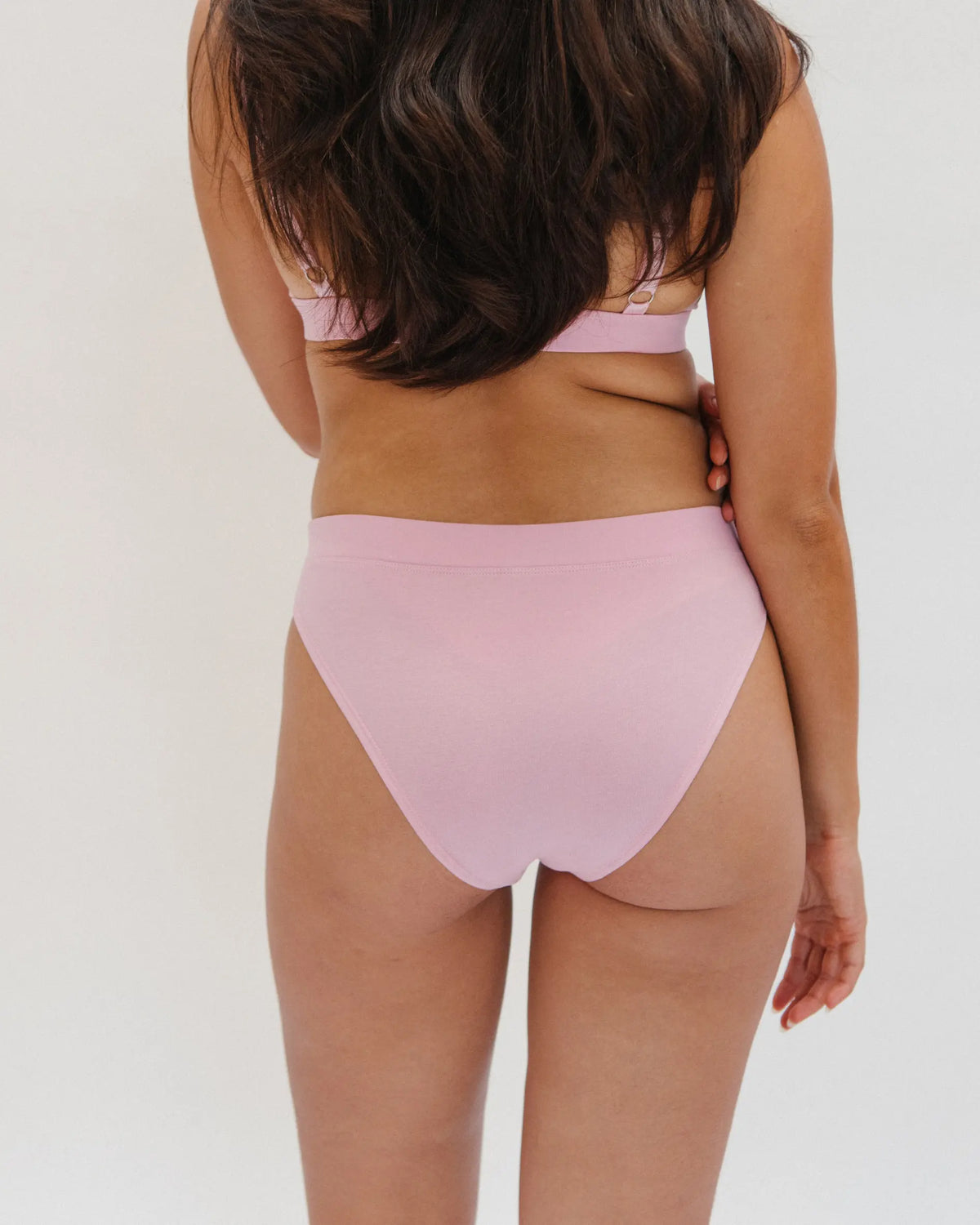
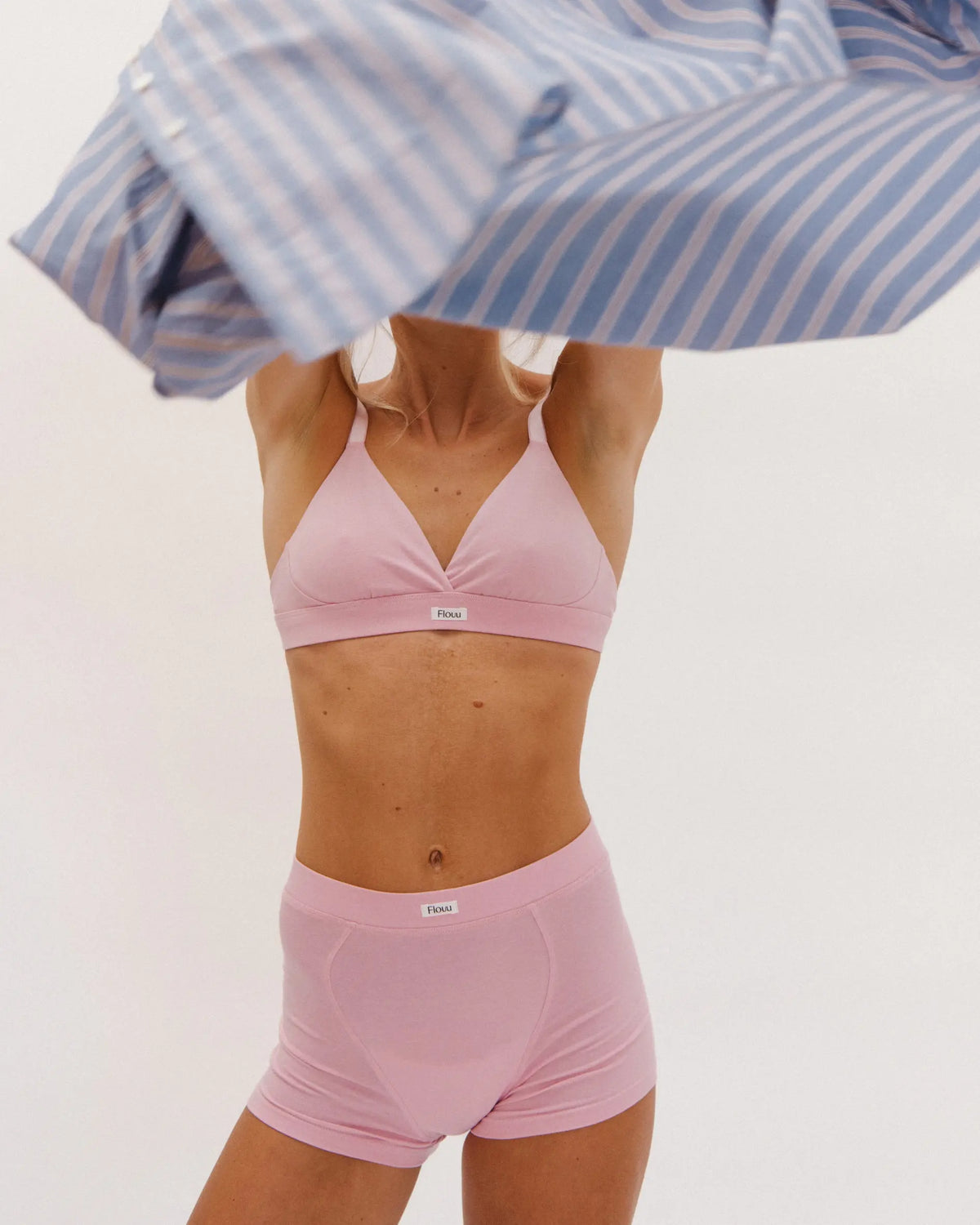
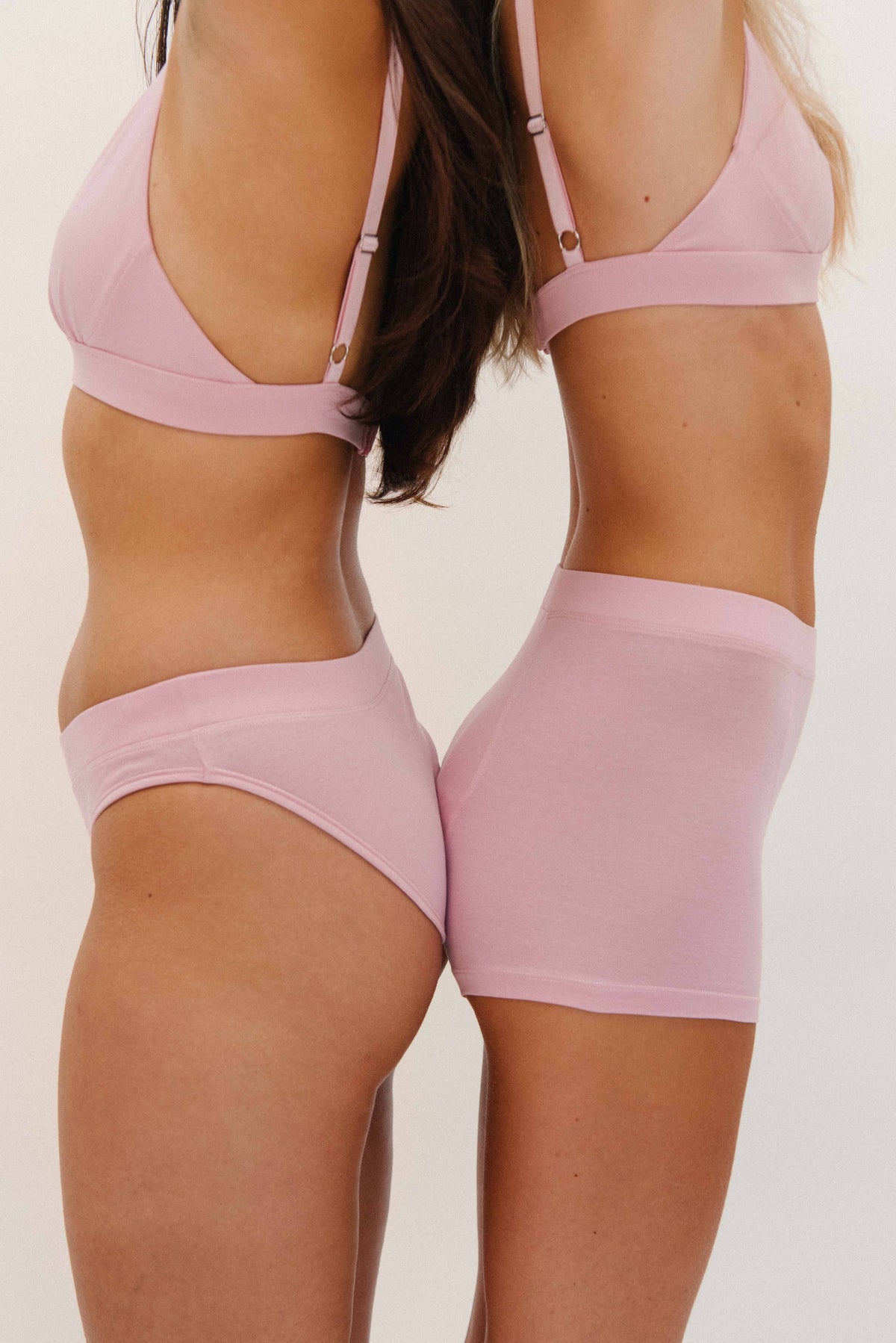
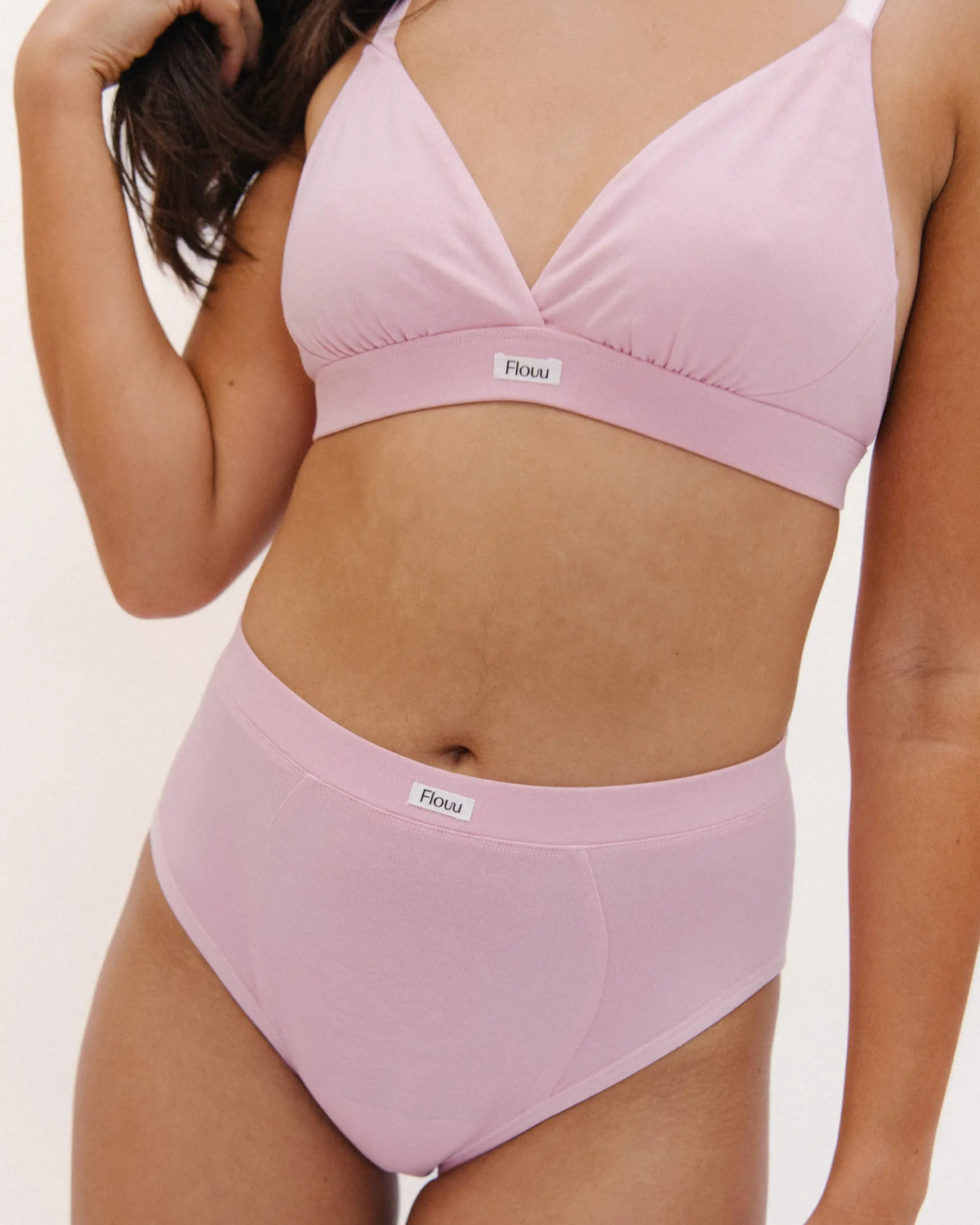
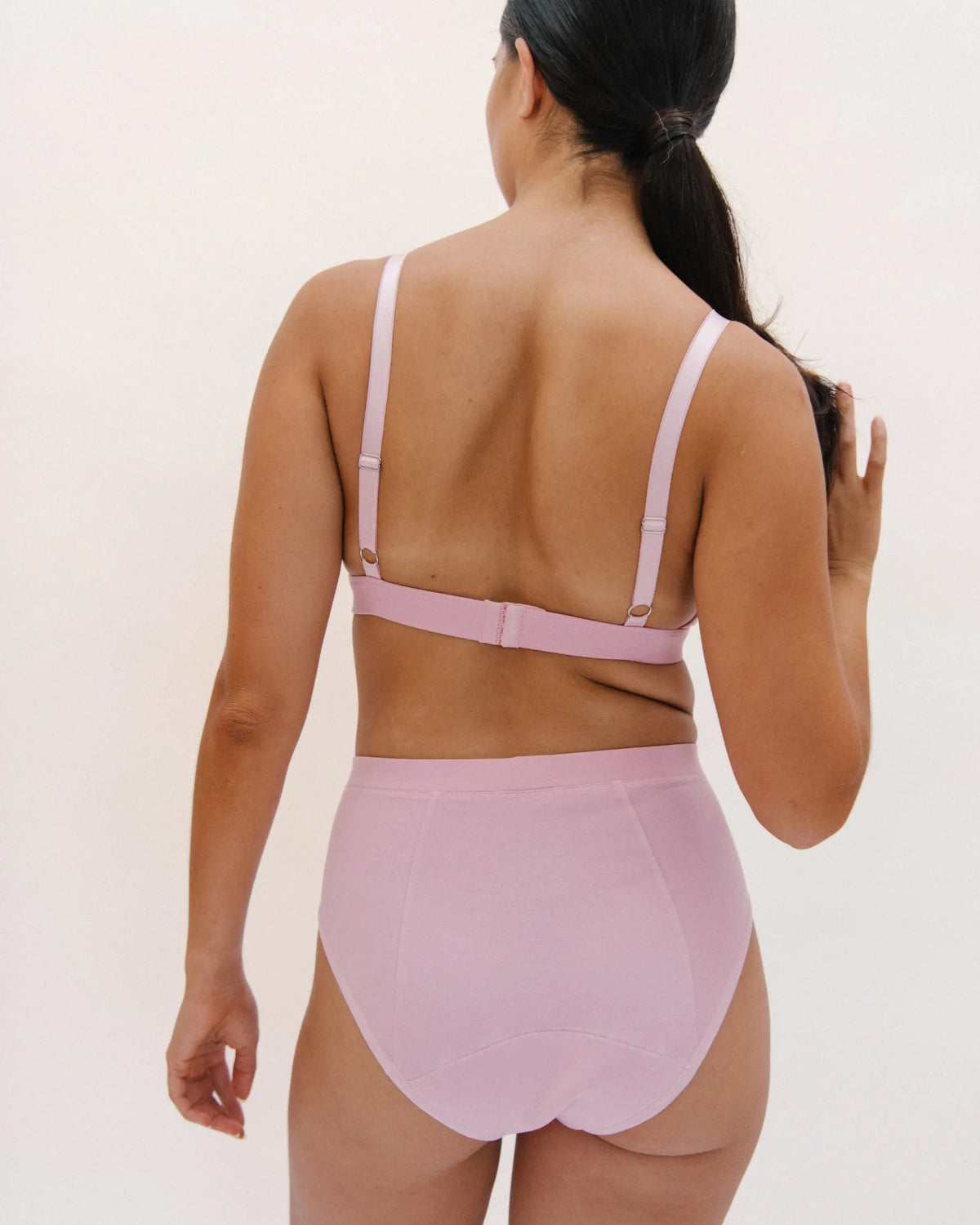
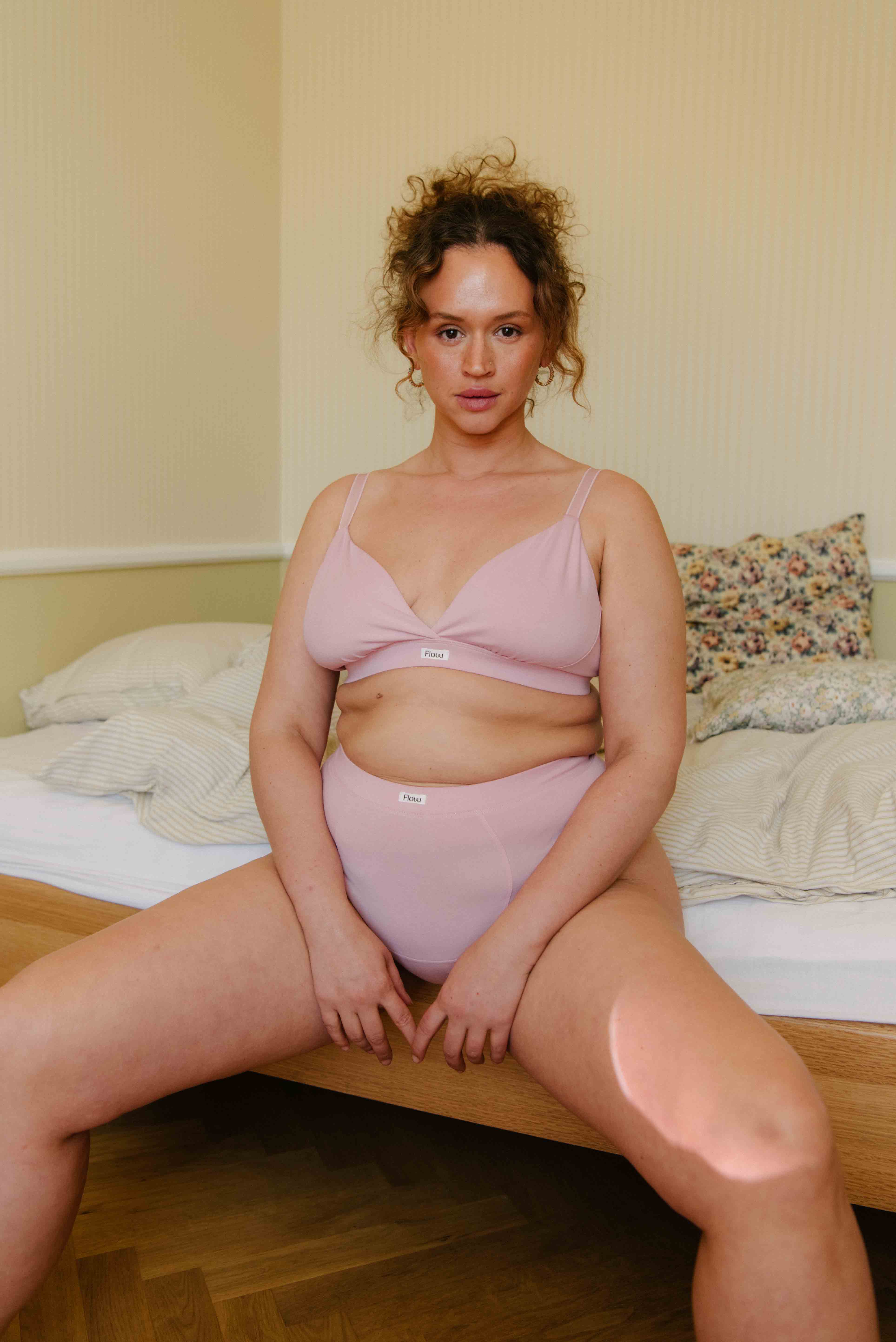
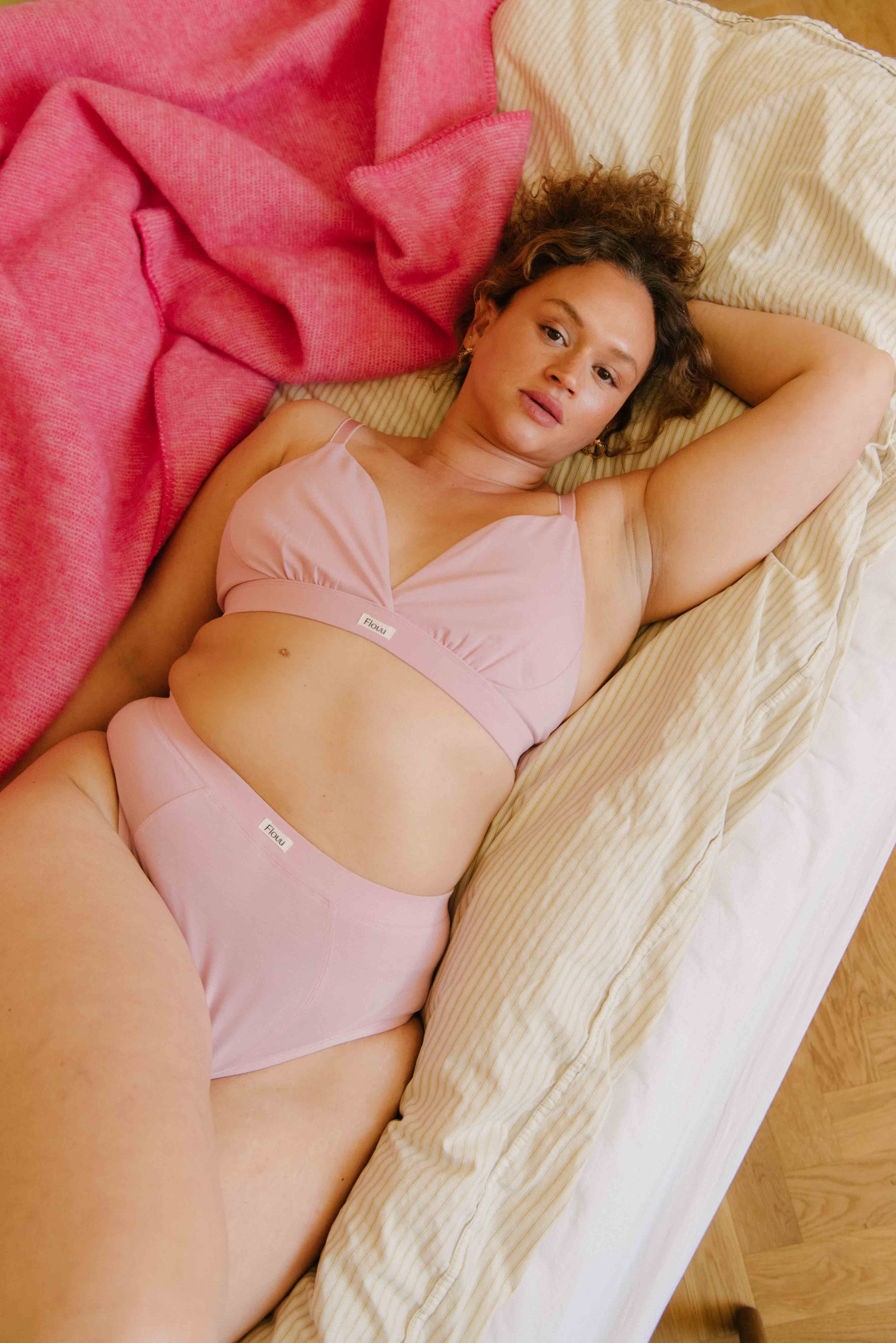
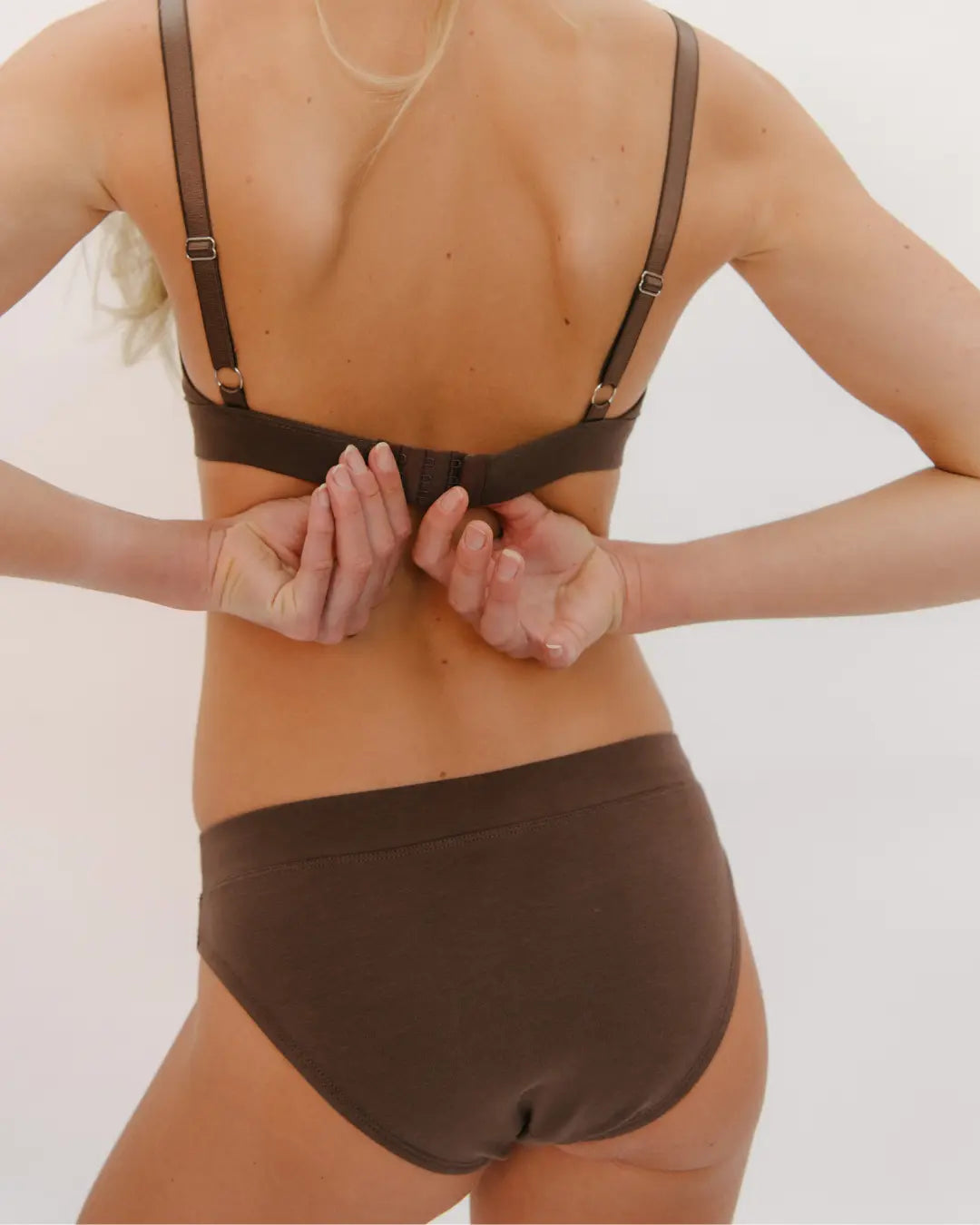
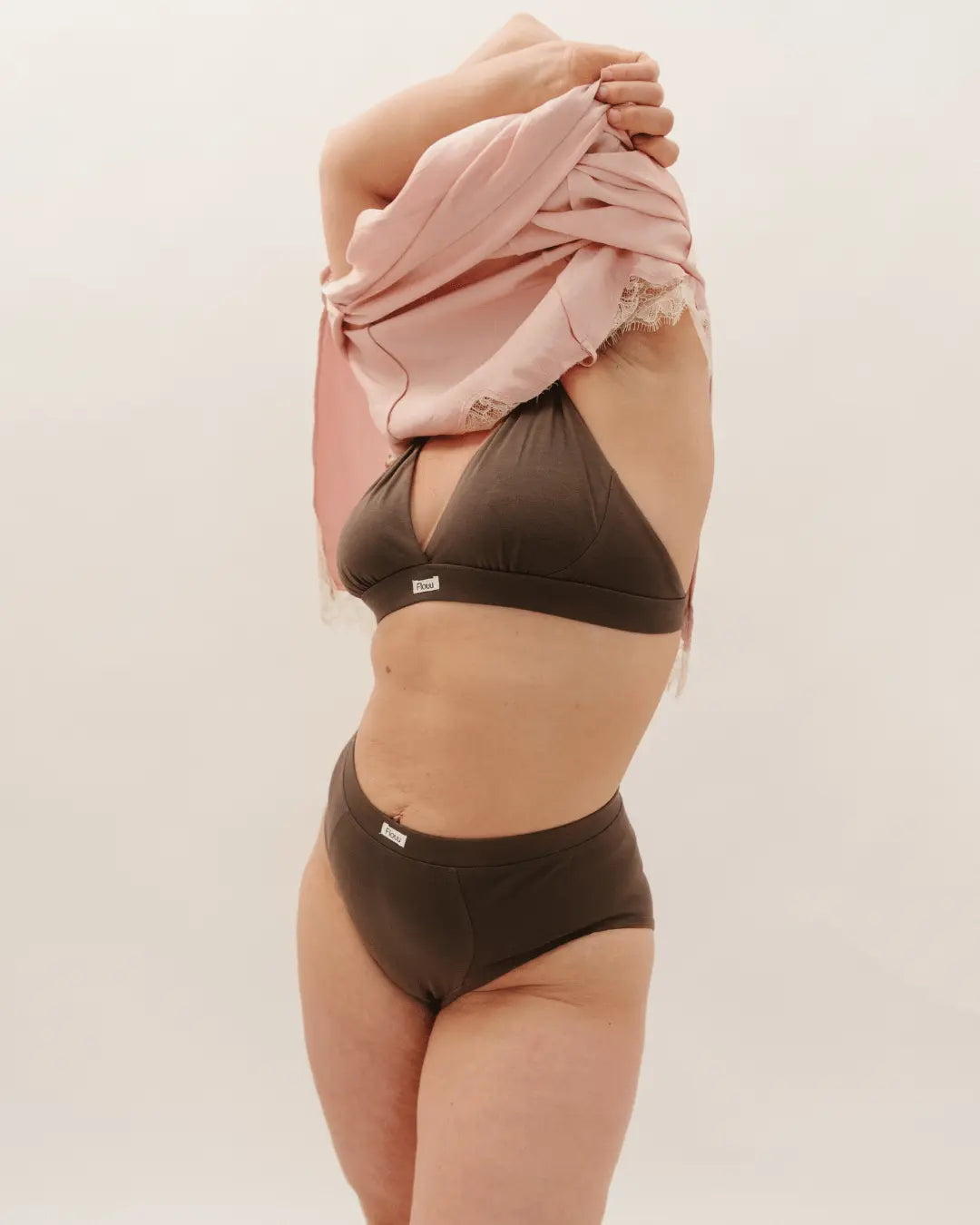
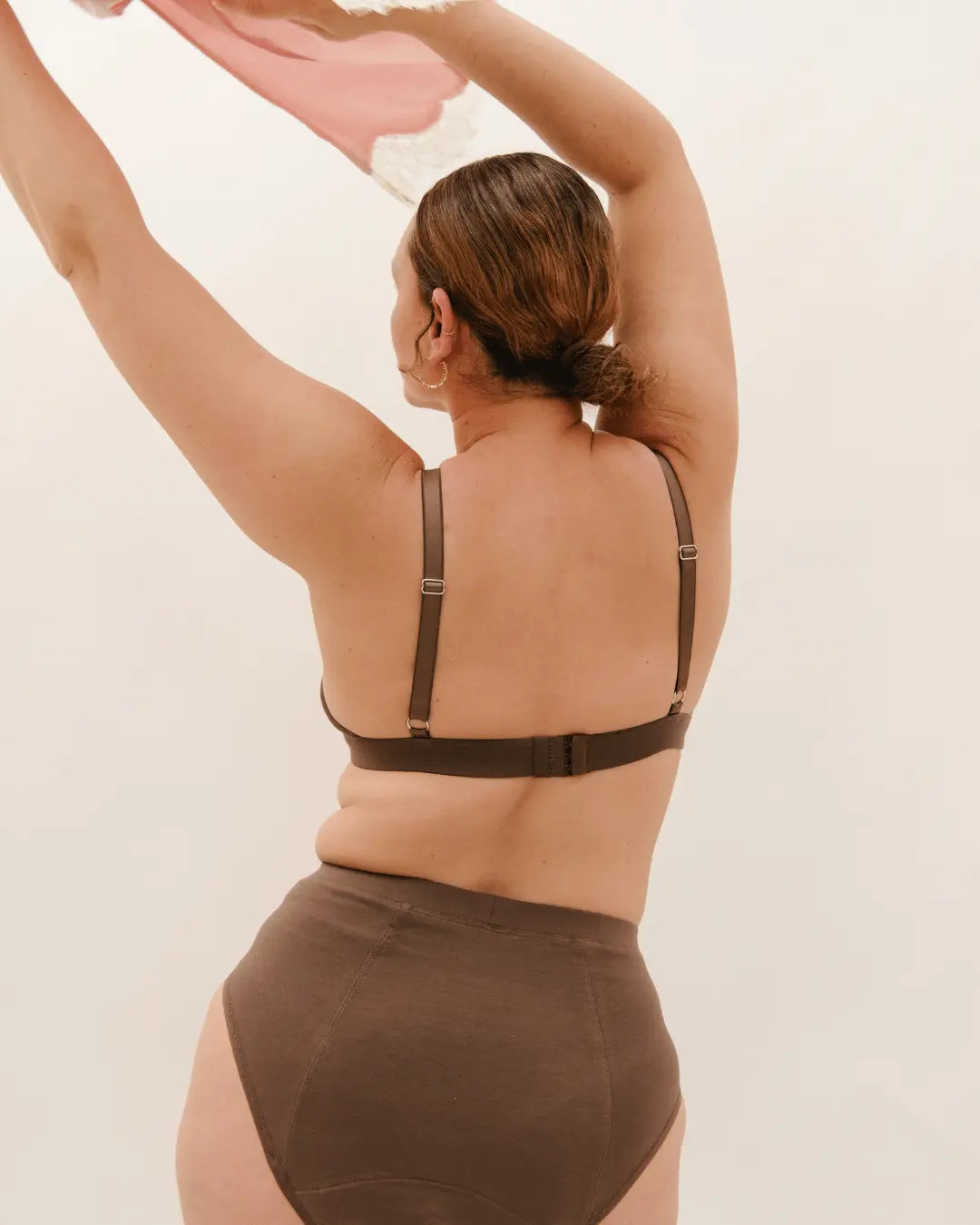
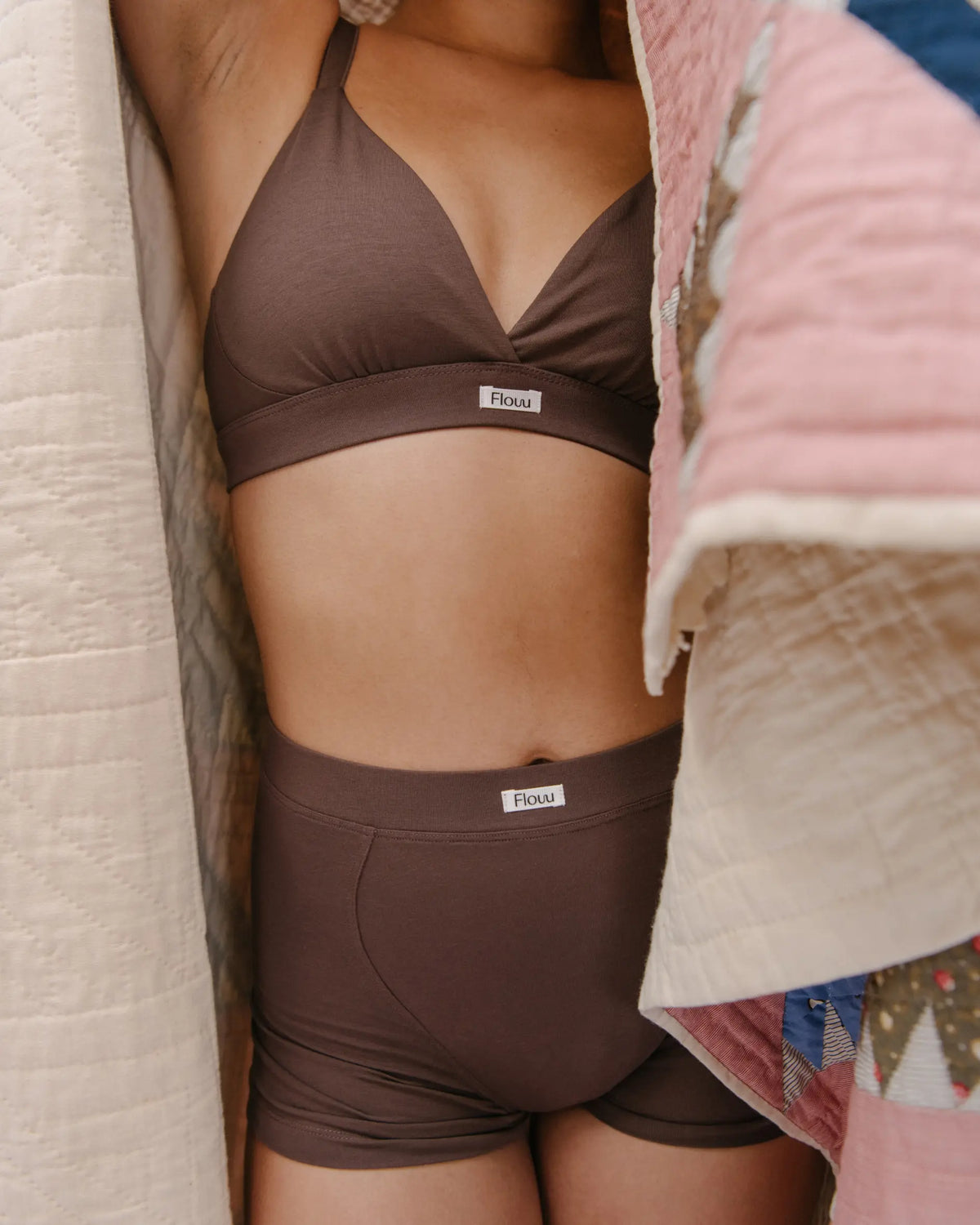
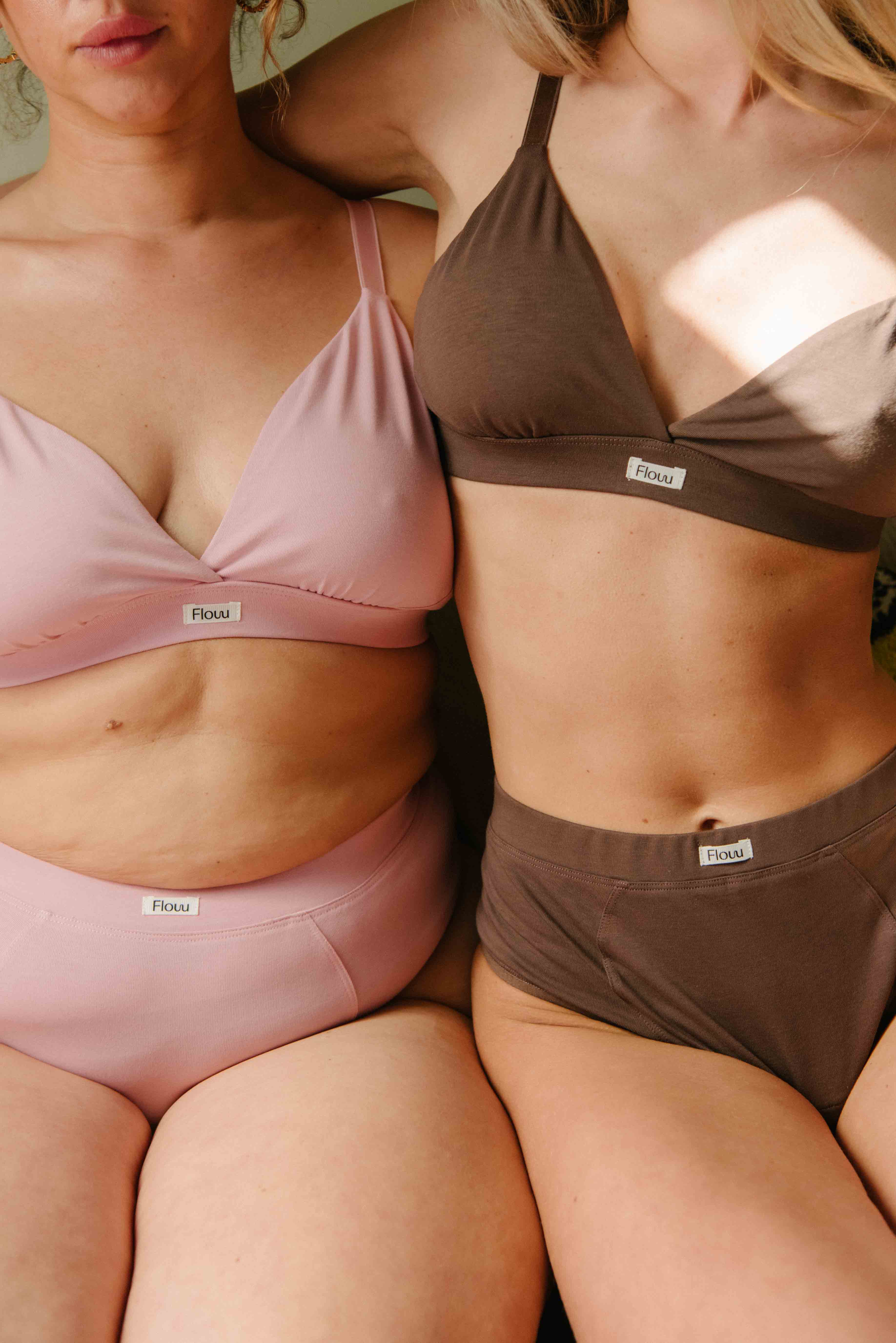
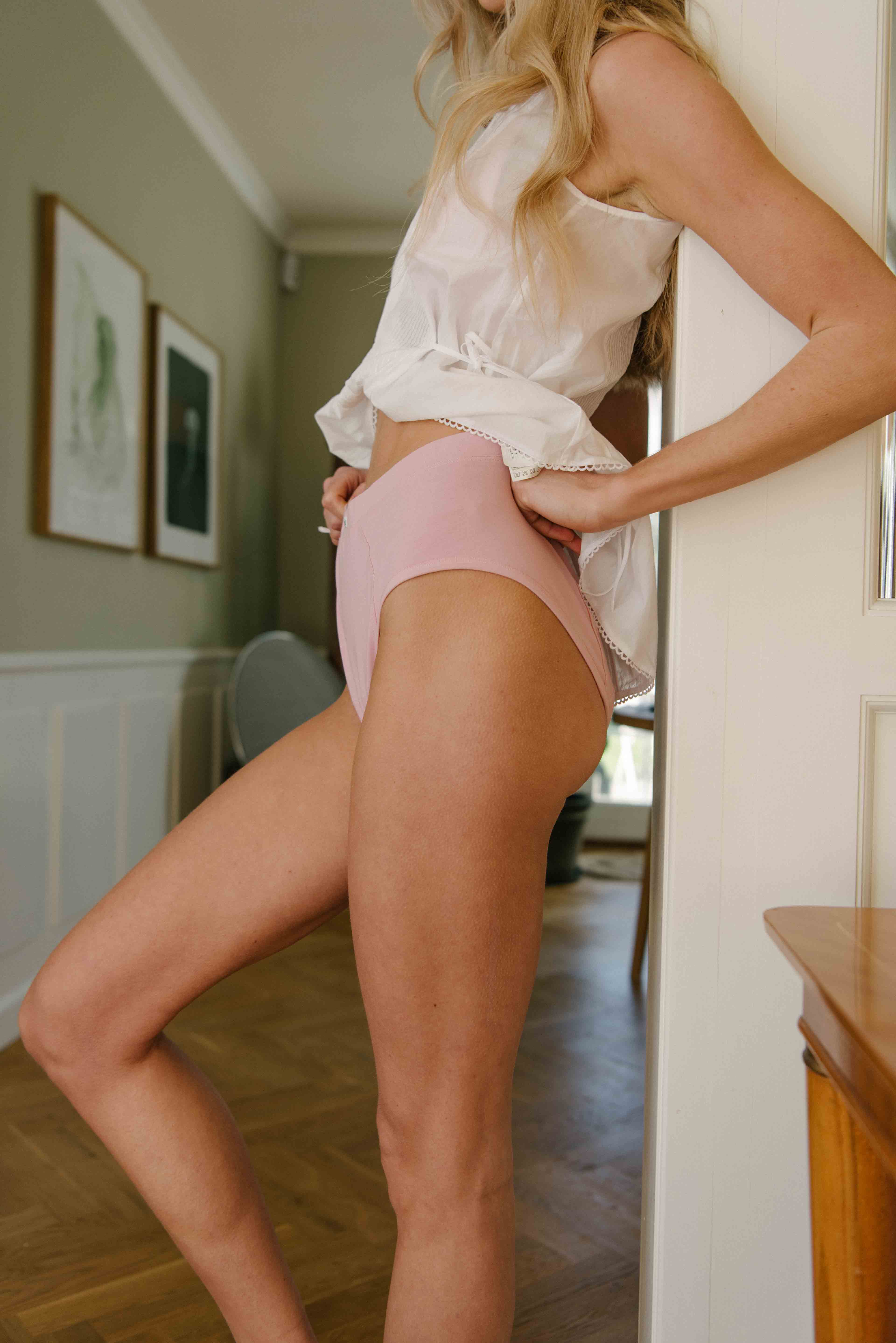
Many people find that menstrual panties can be a comfortable solution during the transition phase, especially when bleeding is moderate. They don't sting, you can say goodbye to the many pads you use in 6-8 weeks - however, during the first week when bleeding is heaviest, it can be nice to have the large pads/"diapers" from the hospital.
When do you get your period after giving birth?
But when will your period return after you give birth? It's very individual when your first postpartum period hits. For some, it's a matter of weeks - for others, months, and then there are those who only get it after 1-2 years.
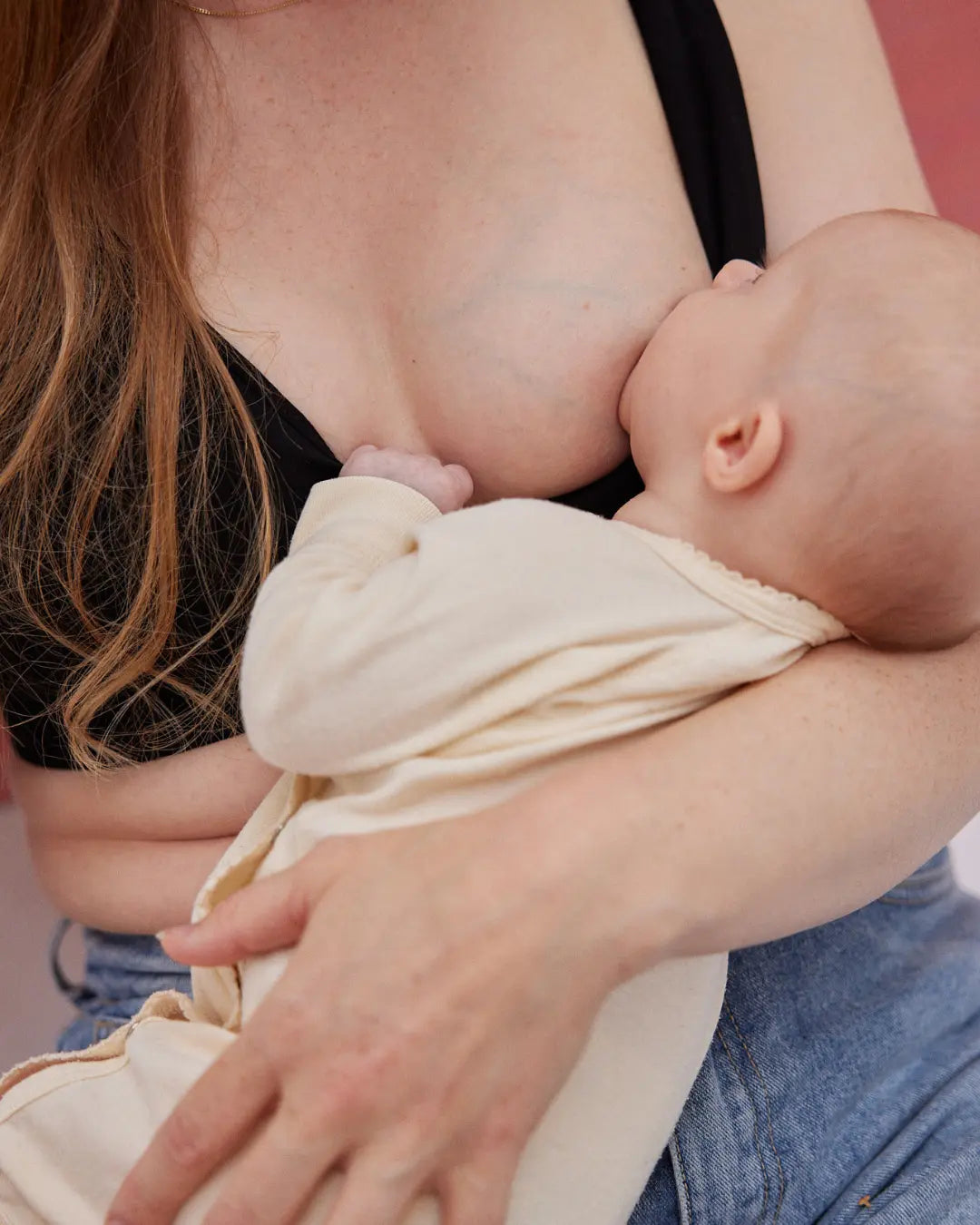
If you are breastfeeding, it may help to delay your period - but it is not certain. In fact, Flow was founded exactly three months after our founder's second birth - despite breastfeeding. So there are many factors that play a role in when your period returns. It is important to remember that your ovulation occurs before your period. Therefore, contraception is important if you want to avoid being surprised with another pregnancy shortly after you have given birth.
👉 Want to geek out about your first period after giving birth even more? Read the article here.
How long does the first period last after giving birth?
How long your first period after giving birth lasts also depends on various factors related to your unique body. This also applies to completely normal periods, where for some they last just a few days and for others they last up to a week. The same will apply during the first period after giving birth. Here it can be nice to protect yourself with a pair of menstrual panties that ensure that you can safely and calmly bleed freely without worrying about how long your period will last this time.
Many people generally experience changes in their menstrual cycle and ovulation after giving birth - you may experience pain during ovulation, irregular bleeding at first, etc. This is quite normal.
Is the first period after giving birth heavier?
Your first period after giving birth may feel both heavier and more painful than the periods you had before you became pregnant. This is typically due to hormonal changes, and your uterus and lining needing to return to their natural cycle after pregnancy and breastfeeding. The body needs to “reset” the normal hormonal balance for a period of time, and this can make the bleeding both heavier and more irregular. However, there are also some who experience less pain during their period after giving birth because their uterus has been stretched and can therefore be more relaxed.
For the vast majority of women, heavier menstrual cycles eventually stop and their periods return to the amount of blood they had before giving birth. Therefore, it may be a good idea to protect yourself during your heavy period with products that can collect more blood, such as diapers, thick panty liners, or menstrual panties designed for heavier flow .
Can you get pregnant before your period returns?
When you have given birth, it is important to think about the possibility that you may become pregnant again at some point. That is why you should think about contraception. Even though it seems far-fetched that you will ever have sex again after giving birth (we are all sitting here with our hands in the air). When you go to your 8-week check-up with the doctor, they will also ask you about forms of contraception - whether you need contraception, and what might be a good solution for you, where you are right now.
For some, the return of menstruation after childbirth can be a welcome news; “hey! The body is working!” For others, it can be a bit overwhelming to have to deal with bleeding on top of everything else that is new. It can also take a while before your cycle is regular again - that is completely normal. Everything has to find itself again - including you. Maybe the menstrual product you last used, before your pregnancy, no longer works for you - and then it is time to try something new? Then you have to try your hand, and menstrual panties are at least a gentle way to start.
Good healing to you <3
Frequently asked questions about menstruation after childbirth
What is the difference between postpartum bleeding and menstruation?
Postpartum bleeding (lochia) is the bleeding that comes from the uterus after childbirth and typically lasts 2–8 weeks. The first period does not come until the cycle starts again.
When do you get your first period after giving birth?
It varies a lot. Some get it after a few weeks, while others – especially when breastfeeding exclusively – only get it after several months or over a year.
Is the first period after giving birth heavier?
Yes, many people experience heavier or longer periods during their first few cycles. This is due to hormonal changes and the uterus still finding its rhythm.
Can you get pregnant before your period returns?
Yes. Ovulation can occur before the first period. Therefore, pregnancy can occur even if you have not yet had your first postpartum bleeding.
When will the cycle return to normal?
For most people, the cycle stabilizes during the first year, but breastfeeding, stress, and sleep can affect how quickly the body finds its rhythm.