

Hvordan snakke med gutter om menstruasjon
Hvordan forklarer du menstruasjon til sønnen din? Cathrine Wichmand deler sine erfaringer som mor og konkrete råd til samtalen – fra de første nysgjerrige spørsmålene til praten om pubertet, produkter og omsorg for andre.
In my life I practice the art of breaking down taboos. I love to bring up taboo subjects, and I have also gradually learned the importance of doing it at the right time and in a way that takes into account the recipient. At least that's where my chance to change something is greatest. And period is unfortunately still taboo. But fortunately, it is slowly moving in the right direction. One of the best places we can start to hold on to that development is with our children.
I have found myself in situations where I have had to pitch flowon several occasions. When I have to convince someone of the relevance of better menstrual products, I usually say that about half of the population will menstruate, are menstruating now, or have menstruated. Of course there is a market.
But insight into and understanding of what it means to menstruate is relevant for everyone. The menstrual cycle is closely related to fertility and the possibility of creating life, and it affects the everyday life of many of the people around us. Although menstruation itself is only a small piece of the whole hormonal puzzle, which many of us live with for around 40 years, it is a really good place to start, especially with children, because it is so concrete.
In this article, I share both my experiences as a mother of a boy and a girl, as well as professional knowledge and recommendations that you can rely on. Although the title focuses on boys, you can definitely read along if you need a little direction in conversation with your daughter.
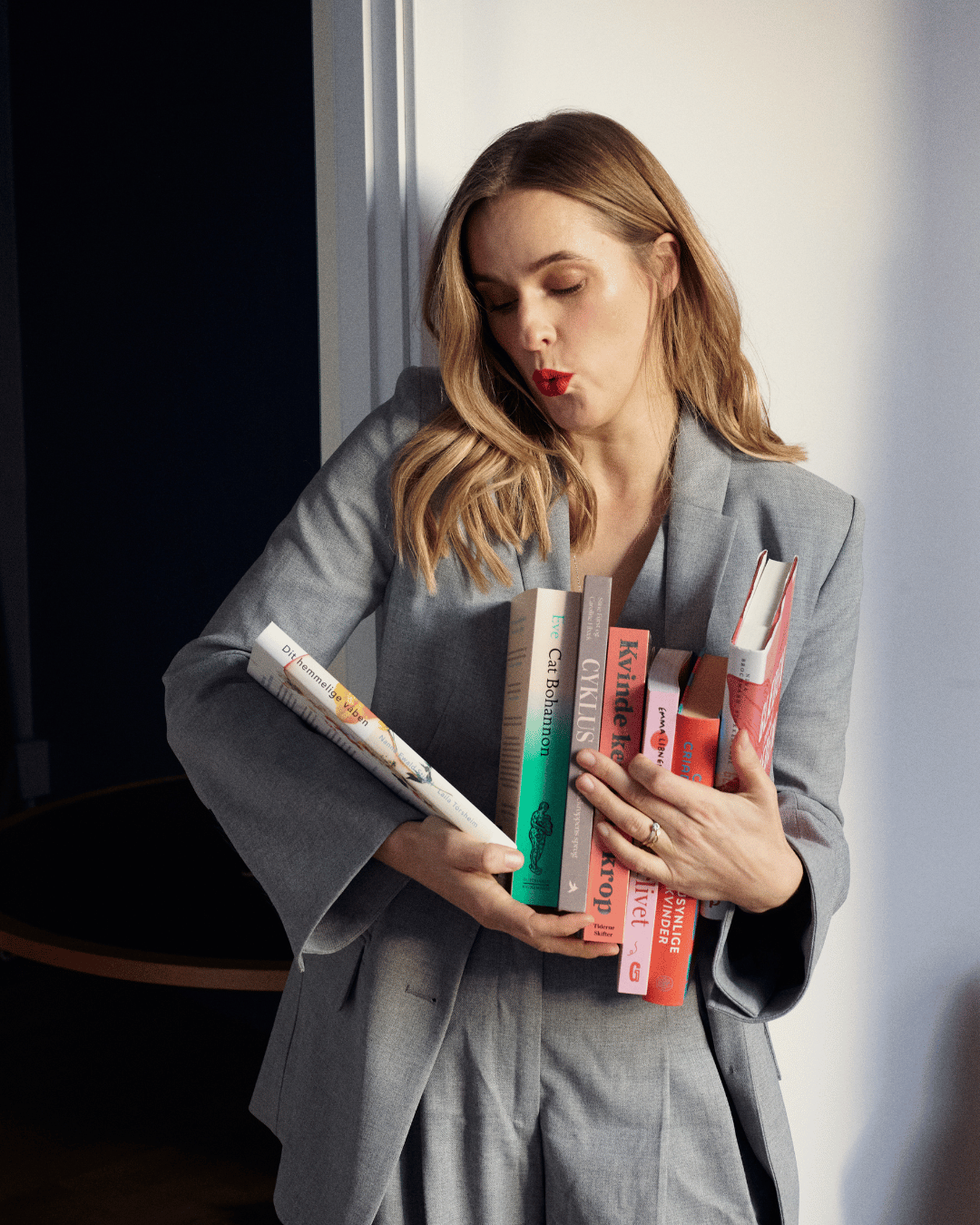
The author: Cathrine Widunok Wichmand
Has studied film and media science, graduated from DR's Talent team. Long-time 'activist' in women's health and one of two women behind the citizens' proposal that changed Danish legislation by lifting the age limit for women's frozen eggs. Founder of flow.
When can you start talking about period with your children?
It is never too early to set simple words on period, I mean. Children are born curious, and the body is one of the very first things they are curious about. They examine themselves, their genitals and the sensation of their body in a room. And they have questions, especially about what they can see. That has been the entry point for me to introduce my children to period.
My children have seen me change diapers — that was before I had flow. They have seen the blood in the toilet bowl and asked curiously: What is it? And one also asked if it hurt.
The conversation about period can start early and quite naturally. In all likelihood, you are rarely on the toilet alone anyway. The English health service, NHS, recommends precisely letting the conversation take place continuously and using everyday small occasions to bring up the topic rather than one big, formal conversation. So:
- Please have menstrual products provided in the bathroom.
- Reply calmly and concretely if the child sees menstrual blood in the pad or in the basin and asks.
- Let the conversation begin early and grow with the child's curiosity.
My hope is that period for my children will become a natural fact that they can talk about confidently without the need to whisper. For both of them, both my boy and my girl, I hope they gain an understanding of what happens in the body, their own as well as those around them. As for my daughter, I hope she will face her first period in peace. And for both of them, I hope they know how to help a classmate who has bled in a good way.
If your children are now so big that they don't hang on to you while you sit on the toilet, there are other places to start the conversation: Ask your child to take a pack of pads when you are out shopping, or to hand you the menstrual panties on the clothesline. And if you prefer to have the bathroom to yourself, you can easily give your children the same knowledge. Openness does not require an open toilet door.
Why should boys learn about period
period is knowledge about the body, which also applies to boys. They may have a mother, sister, friend or classmate who is menstruating. Later they may have a partner who menstruates and who may be affected by it. It is also conceivable that they want to become fathers one day. Therefore, it is essential to understand the connection between cycle, fertility and pregnancy - and later also to know how to prevent a pregnancy if you do not want it.
Knowledge of basic biology gives us the opportunity to act and to face the outside world with care and understanding. And the older the children get, the more details you can add to the conversation. The NHS also recommends that boys learn about the causes, products and possible symptoms of menstruation. A conversation about period can also open up new, fine and not least important conversations about consideration, consent and diversity.
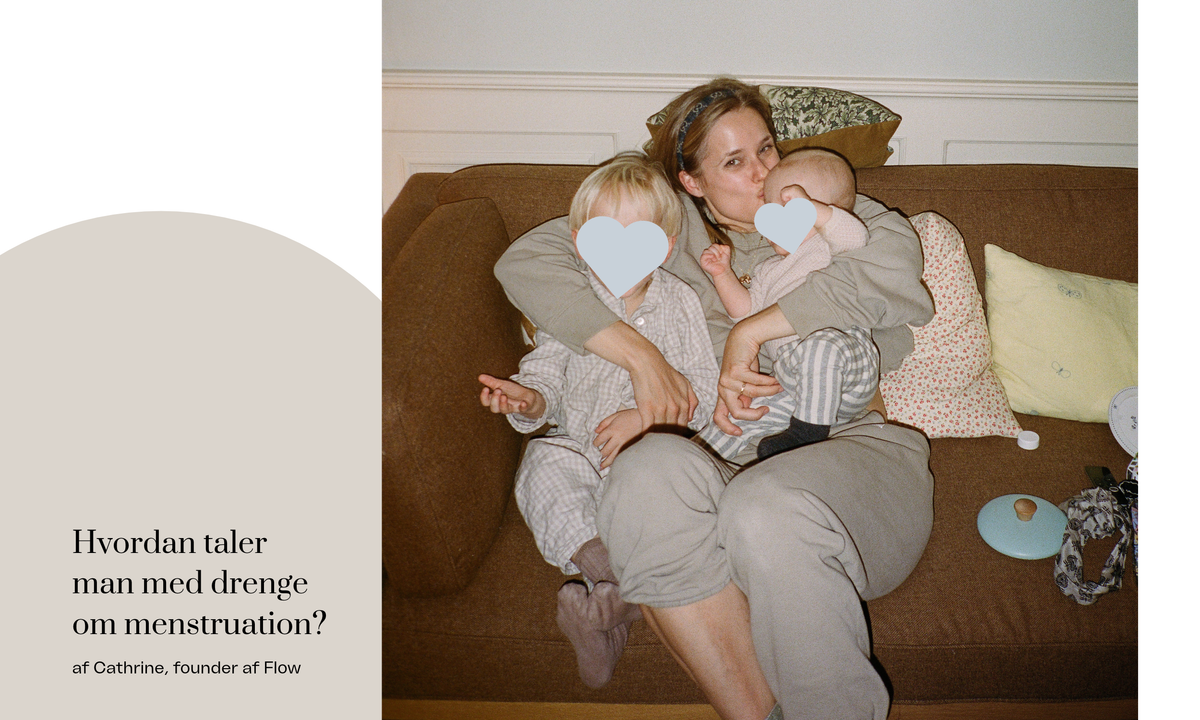
How to explain period at different ages
Children are different, and we as parents often know a lot about how they best accept knowledge. I have made a presentation on what you can tell and when, based on my experiences. Aging is meant to be loose landmarks, so do it in the way that is natural to you.
0–2 years: Put simple words on what the child sees
With the smallest, the explanation can be very short: "It's menstrual blood. It comes from my uterus, which is in here, and out through the vagina. I haven't hit myself."
If the child discovers a pad or a period underwear: "It's a pad. It sits in my underpants and sucks the blood."
Or: "It's my special panties that I use when I have periodThey can suck blood, just like your diaper can suck pee.”
It may be enough to answer specific questions for a start. Feel free to use the correct words: uterus, vagina and vulva, just as you use the words belly, leg and knee. It gives the children a language for the body and makes it less mysterious.
3–4 years: Tell where the blood comes from
I have a five-year-old daughter, and we have had many conversations about period. I love her curiosity. This is a small excerpt from a conversation with her when I had to explain where the blood comes from, free from memory: "Right here I have a uterus. It was actually your very first home. Both you and your big brother lived in my uterus while you grew from a tiny fertilized egg to ready-made babies. Every month the uterus makes a lining of the uterus. It's a bit like wallpaper on the walls of the little home. Here a fertilized egg can attach itself and grow for a baby. But some of the uterine lining is rejected and comes out through the vagina. I still remember how a little lady lived inside one's womb. She wallpapered the nursery every month, hoping that a baby would move in. She unhappily tore the wallpaper down again as period.”
I still remember how my primary school health nurse explained that there was a little lady living inside one's womb. She wallpapered the nursery every month with the hope that a baby would move in. If it didn't, she unhappily tore all the wallpaper down again, and it came out as periodIt has obviously made a big impression on me, but I would probably mix the story with more realism.
If your child is visually inclined, you can also draw it.
By the way, this is an obvious time to explain a little more about the genitals. Your boy may already know the small opening where the pee comes out. You can tell that girls also have a urethral opening, where the menstrual blood comes out. out and where a baby can be born. Behind is the anus. A simple drawing can make the differences much easier to understand.. morning, and therefore I feel a little tired. Or that it hurts, so I need to rest. The wonderful thing is that my children meet it with a completely different care than I often see in society, and then they get snacks and want to cuddle me. At least I tell them that I appreciate it that, and that it's so nice what they do.
5–6 years: More than one period
Here I've started to put more words on what it's actually like to have period. I have told the whole family over the dinner table or breakfast that I expect to get mine period today or tomorrow, and therefore I feel a little tired. Or that I just had it and that it hurts so I need to rest.
The wonderful thing is that I find that my children meet it with a completely different care than I often see in society. They think I should cuddle on the couch, and then they get snacks and want to cuddle me. May it last a lifetime. Anyway, I tell them both that I appreciate it and that what they are doing is so nice.
7–9 years: Talk about puberty and products
We are approaching a time when some girls get period.The first period often comes around the age of 12, but it can come both earlier and later. According to sundhed.dk, it usually comes 18 months to two years after the breasts have started to grow.
There can be girls in the class, which has already had it. That's why it's time to talk about the fact that the body changes during puberty. It happens to girls. It's a good time to talk about what to do if a classmate bleeds through:
"You can tell her quietly, so she can decide what she wants to do. You can offer to lend her your shirt or pick up an adult. And you can let her know that you won't tell anyone else. It can feel a bit big and perhaps new.”
Here it is also a good idea to show your boy what you typically use to handle your period and avoid blood on your clothes.
Show what you have on the shelves. Have your child open a new pad and show a tampon or menstrual cup. Then he can potentially also help a friend in need and ask for the right product. Explain the difference. absorbent layer that soaks up the blood.
- Band sits in the underpants and absorbs blood.
- Tampons sit inside the vagina and soak up blood.
- Menstrual cups sit inside the vagina and collect the blood.
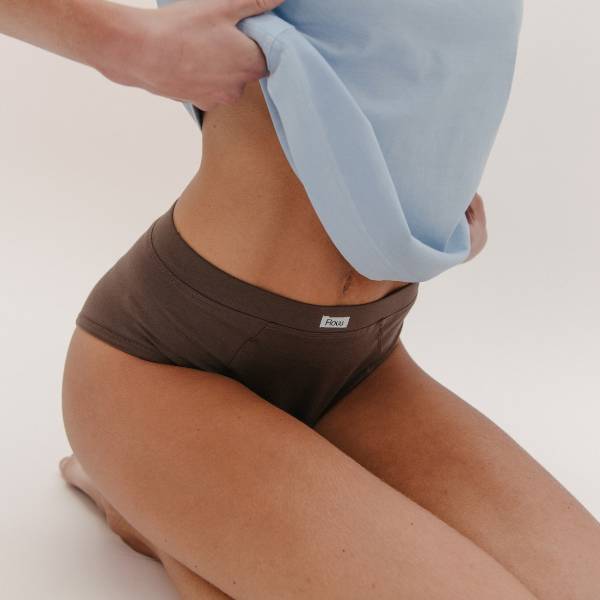
- period underwear has absorbent layers that soak up the blood.
From about 10 years: Ask what he has already heard
Your child is now so big that period may also fill the conversations in class. New knowledge may have been gained here, but misunderstandings may also have arisen. Ask your child: "What have you actually heard about period in school?" Is it filling yet or not at all? Here you can also pick up nicely with: "Is there something about periodthat you think is strange or don't quite understand?"
If your child is ready, add more words. Talk about hormones, ovulation, cycle and pregnancy. It is also important to emphasize that just because you have your first period, you are not an adult, nor are you ready to have a child.
It is also obvious to establish what period actually consists of, so that it is demystified. It is perhaps at this age that it suddenly becomes "disgusting". I would explain it soberly: period consists of blood and tissue from the uterine lining together with mucus and other secretions. The unfertilized egg is microscopic and breaks down; it is not something you can see during menstruation.
If it is the blood that seems violent, you can remind that the child already knows blood from a wound on the knee or finger. But at the same time explain the difference: Menstrual blood does not come because you have hit yourself or have a wound.
How do you answer the questions that may come up?
"Why are you bleeding? Have you hit yourself?"
"No, I have not hit myself. The blood comes from the lining inside my uterus. When some of the lining is rejected, it comes out through vagina along with blood. It's period.”
period so a different kind of bleeding than that from a wound.
"Why don't I get period?”
“To get period You have to have a uterus and a cycle where the lining is built up and rejected. You don't have a uterus, so you can't get period.”
one adds that most boys do not menstruate, but that some trans boys do. And that not all girls and women have period.
“Does it hurt?”
“It can. Some feel very little, and others are in a lot of pain. The uterus contracts and this can cause cramps."
Menstrual pain is common and can be so severe that it affects school and everyday life. Therefore, we must avoid teaching children that it is just a little stomach ache that should be ignored. If the pain limits everyday life or is not relieved sufficiently, you should talk to a doctor.
A child does not need to be able to assess other people's pain. They should learn to believe in the one who says that something hurts.
“Does it make you angry period?”
"Some people find that their mood changes before their period. For example, they may become more sad or irritable. Others don't notice much. You can't tell why someone is angry just because they have period.”
PMS and PMD can cause mood swings, fatigue and irritability in the period before period. Symptoms vary from person to person and from month to month. But a girl's anger or disagreement must be taken seriously. “Do you have period?” is a bad way to listen.
If your child says “adr” or starts laughing
Children can laugh at something they don't understand or become unsure about without being mean. Maybe your boy is laughing. Maybe he thinks it sounds disgusting to have blood in your panties. You don't have to scold to set a clear boundary.
You can say, "I can hear that you think that sounds a little weird. You're welcome to ask. But we're not saying that other people are disgusting because they have period. period is a natural part of life for many girls and women."
Finally, ask about what seems strange and what he thinks is disgusting. Is it the blood? The thought of something inside the body? Or a word he has never heard before? Then you have something concrete to answer.
period may prefer to be private. Openness does not mean that anyone has the right to know everything. You may close the door to the bathroom. A sister can have her products and her cycle to herself. And a classmate doesn't owe anyone an explanation as to why she has a pad in the toilet.
You can also say that out loud: "You can keep your period private. It doesn't mean there's anything wrong, and it doesn't make it embarrassing either."
Let fathers and other adults have the conversation too
For me, it has been important that the whole family's horizons were expanded. My husband, as a child of the 80s, didn't know much about period or the cycle before he met me. But knowing about it benefits both him and all the other women, he meets in his life.
Knowledge of period should not depend on whether a menstruating adult lives in the home. My daughter should also be able to ask him for help and explanation if she is comfortable with it. I would actually see it as a huge gift if she does. Fathers and other caregivers should also be able to explain what a pad is, buy menstrual products and answer questions. If you don't know the answer, you can say:
"I actually don't know. Shall we figure it out together?"
That's actually also incredibly nice and honest. You don't need to be able to remember all the hormones to teach your child to meet others with respect.
At our house, I hope that the small conversations stick around. That my children keep asking. And that one day they meet a friend with blood on their pants and calmly say: "Would you like to borrow my shirt?" Then I will be incredibly proud of them. More than I already am.
Want to read more articles?
8 kvinner som har endret forskning på kvinners helse
Kvinners helse har lenge vært underprioritert i forskning. Møt 8 pionerer som, til tross for motstand, har endret vår kunnskap om fertilitet. menstruasjon og kvinnekroppen.
Helsegapet: Hvorfor vet vi fortsatt mindre om kvinners helse?
I flere tiår ble medisin testet på menn. Resultatet kalles «helsegapet» – et systematisk gap i vår kunnskap om kvinners helse. Her er historien, konsekvensene og hvorfor det fortsatt påvirker kvinn...
Hva er sexy undertøy? Kvinner, selvtillit og komfort fremfor blonder
Hvordan er egentlig sexy undertøy? Vi utforsker hvordan komfort, selvtillit og trygghet ofte betyr mer enn blonder – med kvinners egne ord.
Kronikk: Om begjær og onani – fortalt av en millennial-jente
Les denne ærlige, kroppspositive spalten om veien tilbake til nytelse – fra skam til selvaksept.

Vi elsker å havne i innboksen din.
SPAR 12 % PÅ DIN FØRSTE BESTILLING
Vi skriver nyhetsbrev med største omhu.
Fylt med sykluskunnskap, historier som gjør deg nysgjerrig, og små notater fra vår grunnlegger.
Du vil også være den første som får nyheter om lanseringer, gode rabatter og kommende arrangementer.