
Postpartum hemorrhage: What is “normal” - and when should I react?
Postpartum isn't just baby bump, sleepless nights and new routines. While you're taking care of your little one, your body is repairing itself for you. Yes, the second your baby leaves your body, it's already in full swing of healing. From postpartum pain to an important (and often overlooked) part of that process: postpartum hemorrhage.
In this article, we guide you through what you can expect from bleeding and discharge after giving birth, because you may be left with the questions: How long does it last, how does it differ from menstruation, and what colors and smells are normal.
Written by Simone Mervig

Bleeding right after birth
Right after you give birth, you will experience bleeding. Most people bleed up to half a liter of blood. It sounds violent, but it is completely natural. The bleeding is because the uterus after birth is left with an open wound where the placenta was. You will therefore bleed regardless of whether you gave birth vaginally or by cesarean section.
In the delivery room, they keep a close eye on your bleeding, which should hopefully subside, and they count every milliliter from your body.
You may experience that they massage your uterus to make it stop bleeding, and for most people, that doesn't feel so good right after giving birth.
If you have lost a lot of blood, it may be a really good idea to take iron supplements in the following weeks (but be aware that it can also affect your ability to pass stool - be sure to discuss this with your doctor or midwife).
In the following weeks, the body continues its “cleansing” in the form of postpartum hemorrhage - the body's way of giving the uterus a fresh start, if you will.
What is postpartum hemorrhage?
Postpartum bleeding, also called lochia , is a mixture of blood, mucus, tissue, and secretions that the uterus secretes in the weeks after birth. It is the body's own natural way of removing the lining and any remnants from the pregnancy and placenta. During pregnancy, your uterus has grown significantly larger, and it has accumulated more blood and tissue than normal.
Once your baby is born, your body no longer needs it, and therefore the uterus clears out.
The course and duration of postpartum bleeding can vary greatly from body to body. Some experience postpartum bleeding for a few weeks, others for up to 8 weeks. By your 8-week check-up, the bleeding is typically gone again, and what is common to most is that the bleeding is heaviest at the beginning and then gradually decreases. That's how it should be.

How long does postpartum bleeding last?
Postpartum bleeding typically lasts 6-8 weeks, but it can be both shorter and longer without being a sign that something is wrong. For some, doubts may arise as to whether it is actually the return of menstruation. However, it will often take a little longer to return. The bleeding process can be divided into three phases:
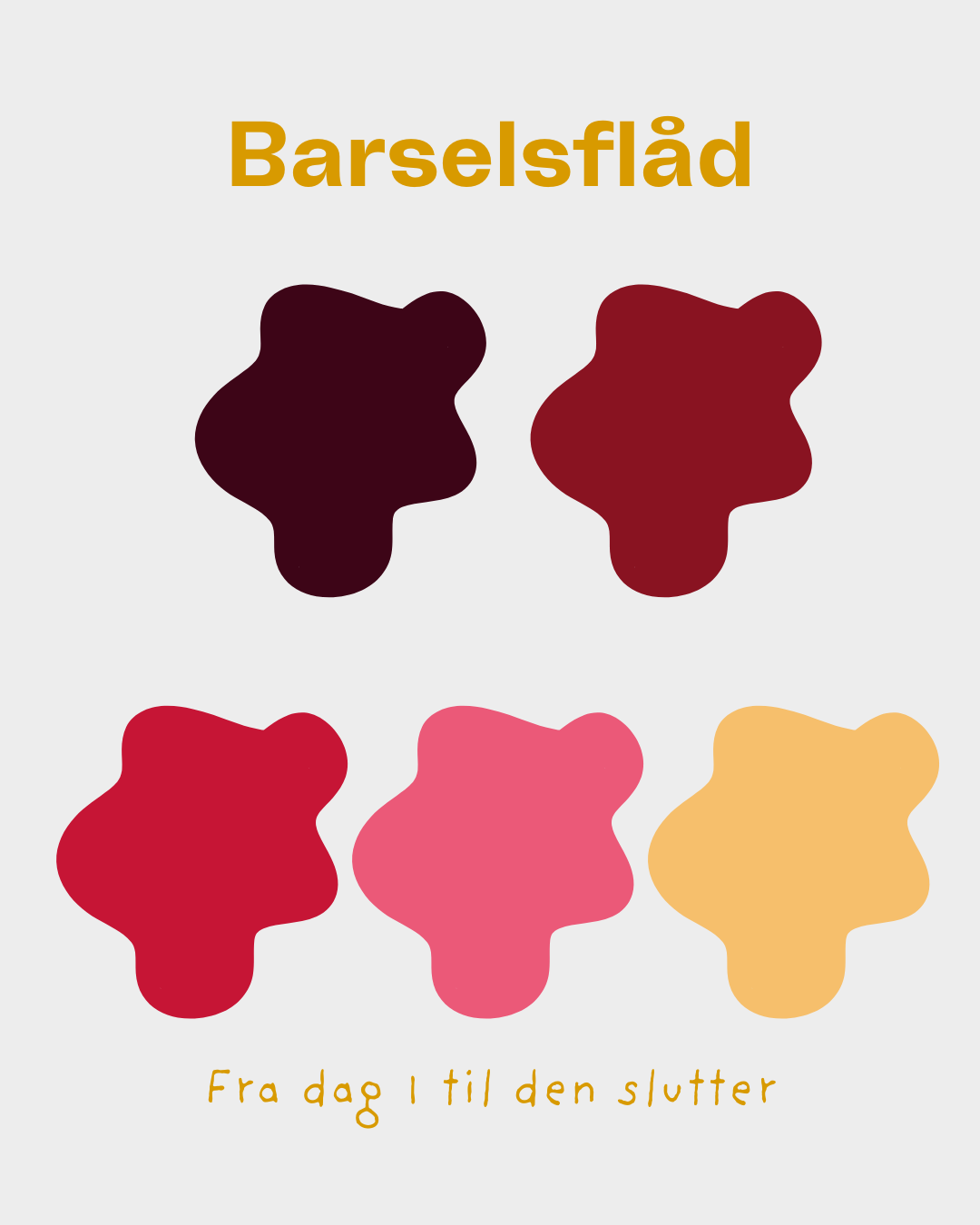
Lochia rubra (typically days 1-5 postpartum):
At first, the bleeding resembles a fairly heavy period for most people, with fresh, red blood. Some will experience smaller lumps (also called clots).
Lochia serosa (typically day 6-14 postpartum):
During this phase, the bleeding or discharge becomes more brownish or pink and gradually decreases. Most people see fewer or no lumps.
Lochia alba (typically up to 6-8 weeks postpartum):
Eventually, the discharge becomes more yellowish or whitish, and the amount decreases. The consistency is more like normal vaginal discharge than blood.
It's not unusual for the bleeding to temporarily increase if you lift something heavy, move around more, or climb stairs. Your uterus is put under gentle pressure and the blood flows out. Think of it a bit like a kitchen sponge that you wring out - and it flows. Maybe a bad analogy, but nevertheless - it can come in flushes.
Postpartum bleeding vs. regular menstruation
Yes, and then there's the doubt we mentioned briefly earlier. Is it postpartum bleeding or the first period?
However, there are some characteristics that distinguish the two different types of bleeding. Postpartum bleeding will typically be heavier at first and last longer than menstrual bleeding. In addition, postpartum bleeding gradually changes in color, consistency, and odor throughout the different phases, whereas menstrual blood typically has a fairly consistent color and odor over a few days.
Color, smell and consistency – what should I keep an eye on?
First of all: If you have the slightest doubt that something is not reliable - talk to your doctor. But if there is, for example, an infection in your abdomen, you will typically also have a fever above 38 degrees. So let's look at the spectrum of "normal":
Color
The bleeding changes color from bright red to brownish/pink and finally yellowish or whitish. Towards the end, it looks more like discharge than blood. Color variations along the way are common - especially if you move around more.
Consistency
Postpartum discharge can be bloody, watery, or mucous-like, depending on which phase you are in. Small clots or lumps are common at first and can be especially noticeable after you have been lying down - the blood clots a bit while you are resting.
We think we could talk more about the clots, tbh. These are these small collections of coagulated blood that are quite common. However, you can be quite startled when you suddenly find what looks like a piece of liver in the toilet - completely smooth on the surface. You can almost fear that you have lost a twin (true story for someone here in the office). But it is widespread.
If you experience them shortly after giving birth, it is a good idea to let your maternity ward or doctor know - at this early stage, the clot will count towards the amount of your postpartum bleeding, and they will typically guide you as to what size of clot is normal ("a chicken egg is fine - an orange is not").
Smell
Blood has a distinct smell - not bad, not good. A slightly sweet or metallic (iron-like) smell is completely expected and may resemble the smell of your usual period. However, a strong, putrid or fishy smell from your vagina may be a sign of infection.
When should I contact my doctor?
If in doubt, contact your doctor - that's rule number 1. However, a little variation in the bleeding pattern is completely normal. However, you should react if you experience:
-
Sudden increase in bleeding after a period of decrease
-
Blood loss greater than during a heavy period (soaked pad in less than an hour)
-
Large blood clots (larger than a golf ball)
-
Fever, chills, or severe pain in the lower abdomen
-
Bad or rotten smell from the maternity ward
It's hard for a first-time mother to know what's normal, but the symptoms above may be signs of infection or retained debris in the uterus that requires treatment.
Now we also mentioned the 8-week check-up. It's much more than a conversation about contraception with your doctor. And even though it's a voluntary offer, it can be nice to talk about the postpartum period. If you're still bleeding or spotting at that time, it could be a sign that there's residue left, and your doctor will take care of it.
How do I deal with postpartum hemorrhage at home?
Your body has just been on a massive nine-month mission. It takes a while to heal after a pregnancy and birth - doesn't that make a lot of sense? Your body has just accomplished something pretty amazing - growing a new organ and a human being. Give yourself a pat on the back and give your body some time to recover.
It also means you don’t have to stress about having to go out with the stroller (although we totally remember how excited we were to be allowed to put our little baby in there). You don’t have to stress about “getting started again”. It all takes time. Your belly contracts, your uterus contracts. It all changes again. Probably not back to what it was. But wouldn’t that also be a shame? That you couldn’t even see what an amazing achievement your body has made?
That aside: There are some things you can do that will support healing and make everyday life a little more enjoyable. Some things that can sweeten your first few days after giving birth:
-
Avoid tampons or menstrual cups for the first few weeks to reduce the risk of infection (you may also think “THAT WILL NEVER EVER GO UP THERE AGAIN!” and you won’t be the first)
-
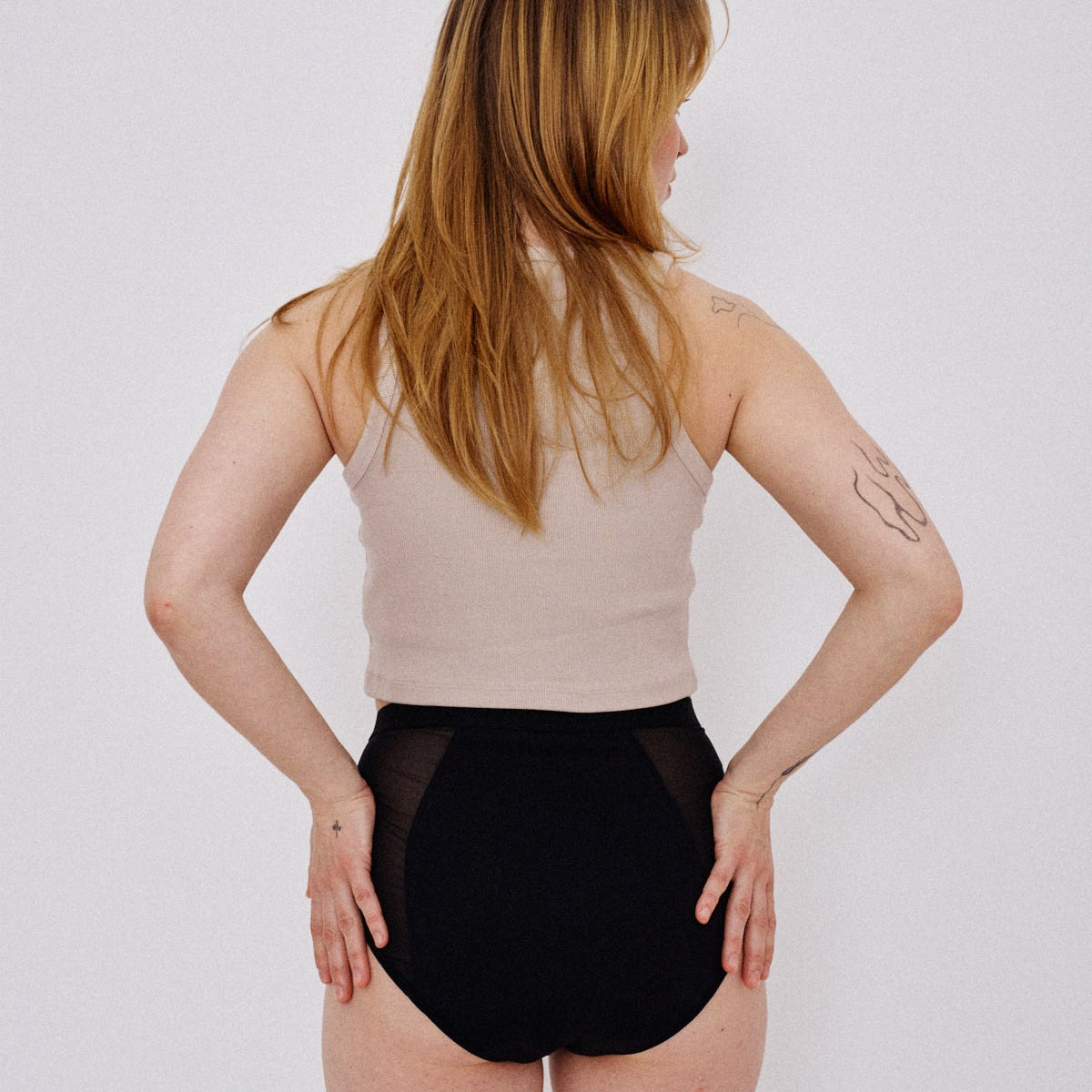
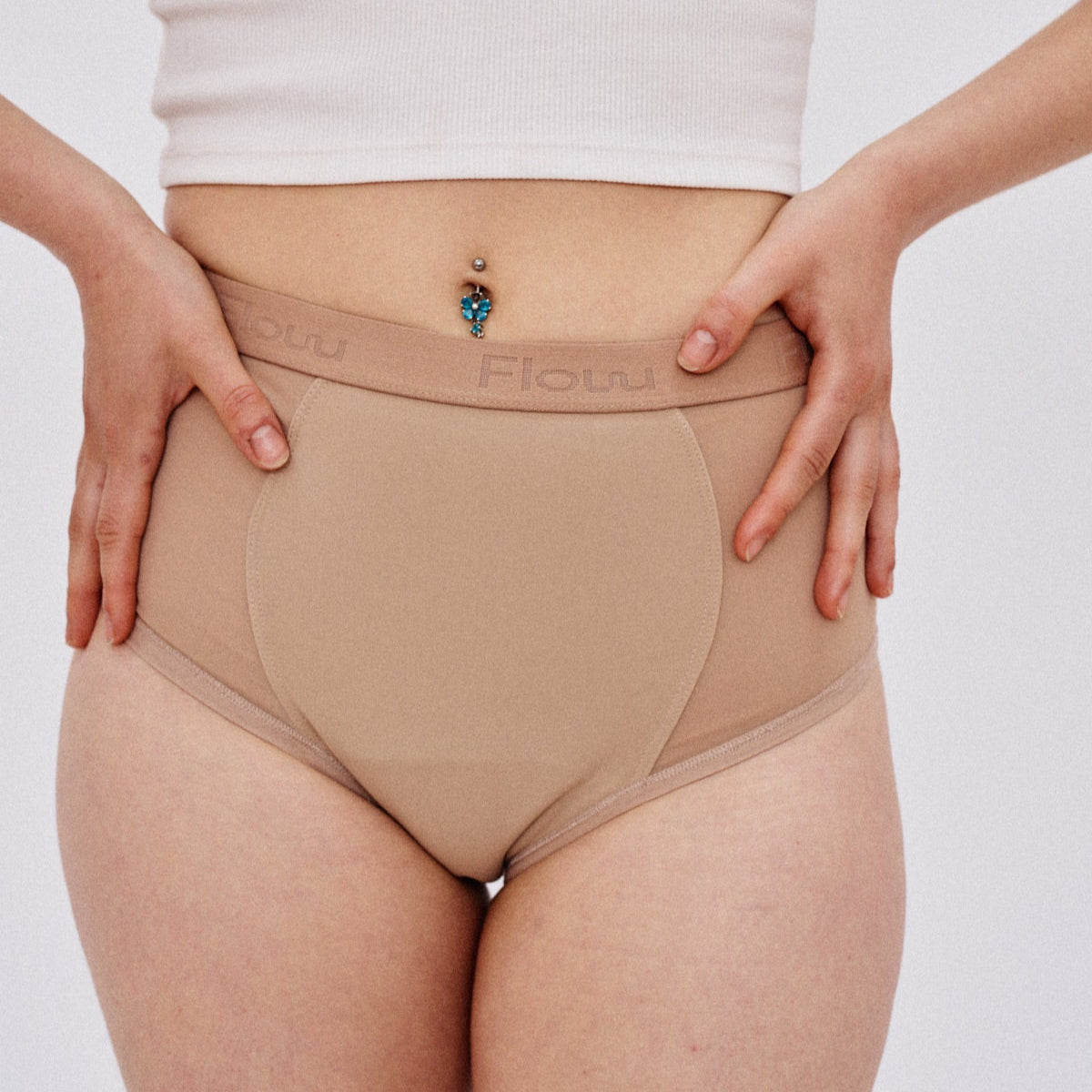
Use pads or menstrual panties and change them often. Many choose Flow 4 for the first few days of heavy bleeding and Flow 1 or Flow 3 for the following period.
-
Rinse your lower abdomen with lukewarm water instead of harsh soaps.
-
Remember to rest when you can. We know it's hard for some and easy for others. But ask for help. For cleaning, for tidying up. We wouldn't hesitate to lend a helping hand if we had been through major surgery. Even though it's *natural* to give birth, vaginally or by c-section, it's a massive undertaking.
Your body has completed the biggest marathon of them all. Take care of yourself, take things at your own pace and have a great recovery <3
References:
Cleveland Clinic - Lochia, Sundhed.dk , Nordsjaellandshospital.dk , NHS - Your Body After The Birth