
5 myths about menstruation – and what's actually true
Menstruation – and the lower abdomen of menstruating women in general – is still surrounded by a lot of mystery. And taboo.
There are still many myths about menstruation, even though we know much more about the cycle and hormones today than before. However, there are still areas where research and knowledge lag behind. The female body and women's diseases have been underexposed and underfunded in research for centuries. This helps to give room to the myths, but let's put an end to them. Once and for all.
The 5 myths about menstruation we debunk in this article
-
Menstruation syncs with girlfriends
-
PMS is not a real condition
-
Tampons or cups can disappear inside the body
-
You can't get pregnant during menstruation.
-
Delayed menstruation is always due to menstruation
Let's take a look. Five of the most common menstruation myths – and dispel them once and for all.

Myth 1: “We synchronize our periods with our friends”
Falsk.
Many people find that their periods suddenly coincide with those of their friends or colleagues. This has led to the theory that women automatically synchronize their cycles when they spend a lot of time together.
But research has examined it again and again and finds no solid scientific documentation for menstrual cycles to actually synchronize.
What often happens is simple statistics. If several people have cycles of different lengths, they will occasionally coincide – and then drift apart again.
So it may feel like synchronization, but in reality it's just natural variations in cycle length.
Myth 2: “PMS is not a real condition”
Falsk.
One of the most persistent myths about menstruation is that PMS (premenstrual syndrome) is just something that menstruating women use as an excuse for being in a bad mood.
But PMS is a real physiological state, which occurs in the days before menstruation.
After ovulation, hormone levels – especially estrogen and progesterone – gradually begin to decline. These hormonal changes affect both the body and the brain.
Typical PMS symptoms can be:
-
irritability
-
sadness or tearfulness
-
sore breasts
-
fatigue
-
difficulty concentrating
For some, the symptoms are so severe that they fall under the diagnosis PMDD (premenstrual dysphoric disorder), which can affect up to 8% of menstruating women and requires medical treatment. There is a significantly increased risk of PMDD in women with ADHD,
Myth 3: “Tampons or menstrual cups can disappear inside the body”
Falsk.
This is a fairly common concern – especially if you are new to using tampons or menstrual cups.
But anatomically it can not possible.
The opening between the vagina and the uterus – the cervix – is very small and acts as a barrier, so neither tampons nor cups can disappear further up the body.
If a product feels difficult to get out, it is typically due to:
-
that it sits high in the vagina
-
that the muscles tense
In that case, it may help to relax and change position.
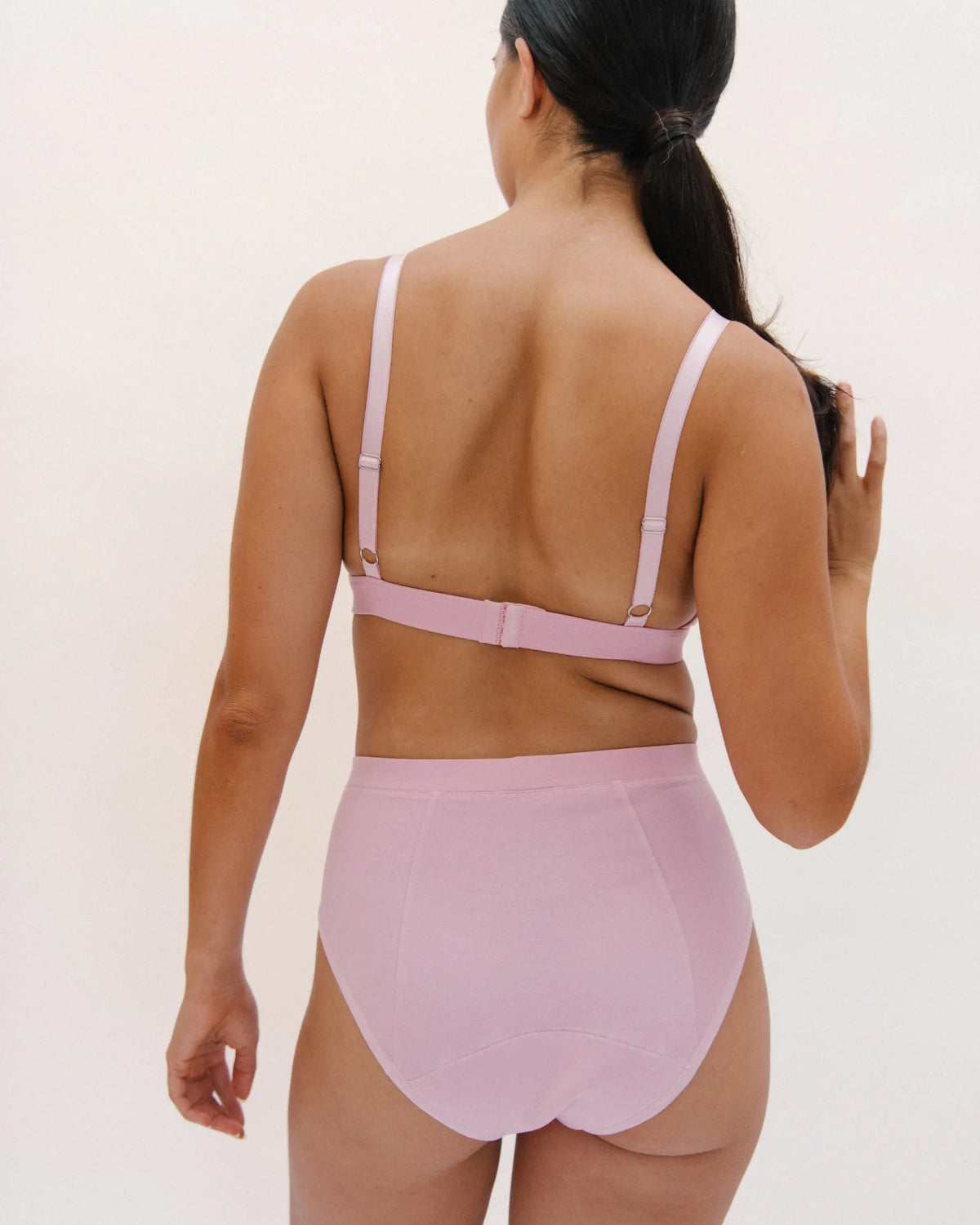
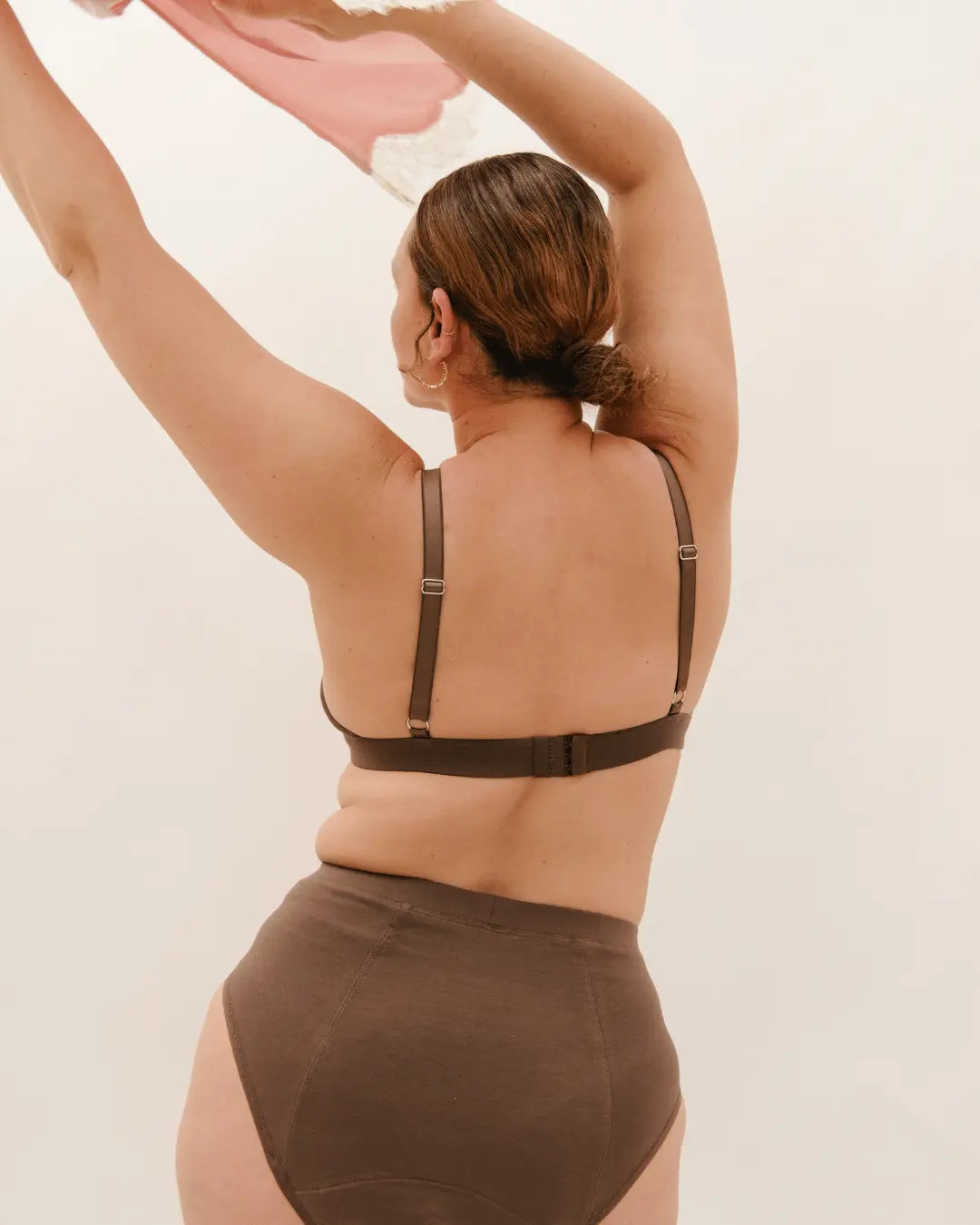
👉 If you are more comfortable with a menstrual product that does not need to enter the body, you can try our menstrual panties.
Myth 4: “You can’t get pregnant during menstruation”
So half false – or half true.
Many have been told that menstruation is a “safe period.” But the body is not a machine, and ovulation can vary from cycle to cycle.
Sperm can survive in the uterus for up to 3–5 days.
If you have unprotected sex at the end of your period and your ovulation occurs early in the cycle, sperm may still be present when the egg is released.
Therefore, it is technically possible to get pregnant during menstruation, although the risk is often lower. You can read much more about pregnancy during menstruation in the article here.
Myth 5: “It’s the period that’s delayed”
Not quite right.
When a period is “delayed”, it is almost always because ovulation has been delayed.
There is typically a fairly stable number of days between ovulation and menstruation (often around 12–14 days).
If ovulation is delayed – for example due to stress, illness or changes in sleep – menstruation will also be delayed.
If you want to understand your cycle better, it might be a good idea to: track signs of ovulation, not just the bleeding itself. We will guide you on how to do this in this article.
The sum of the sums
Menstruation is still surrounded by many myths – often because research into women's health has historically been under-prioritized.
But the more we talk openly about cycles, hormones and fertility, the better we can understand our own bodies.
And maybe even dispel some of the old myths along the way.
FAQ - in brief
Do women synchronize their periods?
There is no solid scientific evidence that menstrual cycles synchronize between people.
Can you get pregnant during menstruation?
Yes, it is technically possible, especially if ovulation occurs early in the cycle.
Can a tampon disappear inside the body?
No. The cervix is too small for a tampon or menstrual cup to pass through.
Is PMS a real condition?
Yes. PMS is a hormone-related condition that can cause both physical and psychological symptoms before menstruation.