
Iron deficiency and period: Could this be why I'm so tired?
You might get enough sleep. You eat fairly varied. Yet it feels like the energy is fading every month.
Maybe you get extra tired in the run-up to your period. Perhaps the fatigue persists long after the bleeding has stopped. Or perhaps you find it difficult to concentrate, get out of breath more quickly or feel that the body does not have the energy it used to.
If this sounds familiar, you are far from alone.
For some, the fatigue is a passing part of the cycle. For others, it takes up so much that it affects work, family life or the desire to be active.
Both parts are real experiences.
There is no single explanation for fatigue around menstruation. Hormones, sleep, pain and stress can all play a role. But iron deficiency is also a possibility - especially if you have heavy or prolonged periods.
Iron deficiency is one of the most common deficiency conditions in women of childbearing age, and period is one of the main reasons. This is simply because the body loses iron when it loses blood. The WHO also describes that period as one of the main causes of iron deficiency in women worldwide.
This does not mean that all women with period have an iron deficiency. However, if the fatigue is significant, persists or feels different than usual for you, it may be worth investigating whether your iron stores are playing a role.
In this article we take a closer look at why period and iron are closely related, which symptoms you should be aware of and when it makes sense to talk to your doctor.
This article was written by Cathrine Widunok Wichmand,
journalist + founder of flow

Why is iron so important?
Iron is a mineral the body needs every day.
Among other things, it is included in the formation of hemoglobin – the protein in the red blood cells, which transports oxygen from the lungs to the body's tissues and muscles.
When the body lacks iron, it becomes more difficult to transport oxygen efficiently. Therefore, it is often the energy that is hit first.
For example, you may experience that:
- become unusually tired
- become short of breath more easily than usual
- have difficulty concentrating
- feel dizzy
- lack of energy for things that previously felt easy.
If the iron deficiency develops further, it can lead to iron deficiency anemia (anemia), where the body can no longer make enough healthy red blood cells.
However, it is important to know that the body's iron stores may well be low before anemia develops. Therefore, some women experience symptoms even though their blood percentage is still within the normal range. We will return to this later in the article.
Why increases period the risk of iron deficiency?
Every time you menstruate, your body loses blood.
And when you lose blood, you also lose iron.
It is a completely natural process, which the body can easily compensate for in most people through the diet and the iron stores it already has.
But if you bleed a lot, menstruate for a long time or don't get enough iron through your diet, the accounts can slowly tip over.
Over time, the body may use more iron than it can regenerate.
This is one of the reasons why women of childbearing age are at significantly greater risk of iron deficiency than men and women after menopause. The World Health Organization (WHO) also describes it period as one of the most important causes of iron deficiency in women worldwide.
Heavy periods increase the risk
The more blood you lose during menstruation, the greater the risk of the body's iron stores being depleted.
According to the American College of Obstetricians and Gynecologists (ACOG), heavy periods are one of the most frequent causes of iron deficiency and anemia in menstruating women.
Doubt if you suffer from severe period or menorrhagia, read about the symptoms here →
But what does it really mean to have a powerful one period?
You should talk to your doctor if, for example, you:
- bleeding for more than seven days
- need to change pads or tampons every hour or every two hours for several hours
- often bleeds through clothing or bedding
- have to get up at night to change the menstrual product
- have large blood clots
- find that menstruation limits your everyday life.
Many women gradually get used to a strong period and thinking it's "just the way my body works".
But heavy periods are not something you necessarily have to put up with.
There may be an underlying cause that can be treated. And at the same time a powerful can period increase the risk of the body's iron stores being depleted over time.
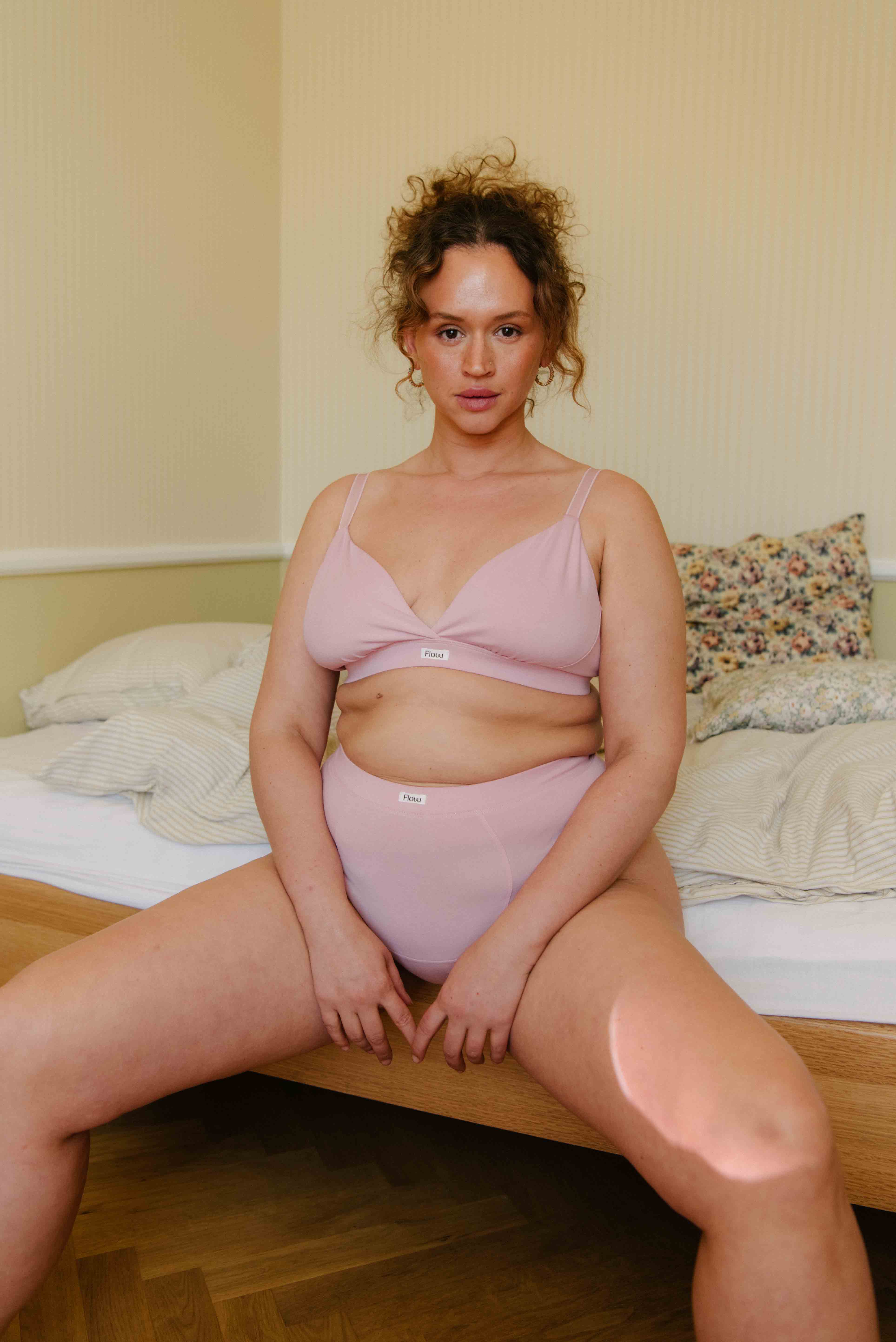
Here you will find period underwear to heavy bleeding →
What symptoms can iron deficiency cause?
Iron deficiency usually develops gradually.
For some, symptoms creep in over months. Others only discover that something is different when they look back.
The most common symptom is fatigue. But iron deficiency can manifest itself in many different ways, and not everyone experiences the same symptoms.
Among other things, you can experience:
- that you become unusually tired or exhausted
- that you become short of breath more easily than before
- dizziness
- headache
- heartbeat
- difficulty concentrating or "brain fog"
- cold hands and feet
- pale skin
- brittle nails or increased hair loss.
The symptoms are not specific to iron deficiency. They can also be caused by many other things. Therefore, the diagnosis cannot be made based on symptoms alone.
But if you can recognize several of them - especially if you have heavy periods at the same time - it may be a good idea to talk to your doctor.
Can you have iron deficiency without anemia?
Yes – and this is something that many people are surprised by.
The body has a store of iron that it uses up before actual anemia develops.
This means that your iron stores may well be low, even if your blood percentage is still within the normal range.
When the doctor examines for iron deficiency, both:
- Hemoglobin, which shows whether you have anaemia.
- Ferritin, which says something about the body's iron stores.
Today, ferritin is the most important marker to assess the body's iron status in most people and is also recommended by the World Health Organization (WHO). However, ferritin can be affected by, among other things, infection and inflammatory conditions, and therefore blood tests are always assessed together with your symptoms and other medical history.
Can low iron stores cause symptoms?
It is an area that researchers continue to investigate.
Some studies indicate that women with low iron stores may experience fatigue, among other things, even if they have not yet developed anaemia. Other studies find a less clear connection.
This does not mean that your symptoms are "just in your head". Nor does it mean that low iron stores are always the explanation.
This means that research cannot yet say exactly at which ferritin levels symptoms occur, or why some people feel them more than others.
Therefore, an investigation is not only about numbers on a laboratory answer. It is also about your experience, yours period, your medical history and the symptoms you present with.
It is precisely the combination of blood tests and your story that provides the best basis for assessing whether iron deficiency can be part of the explanation.
When should you talk to your doctor?
It is completely normal to be more tired at times.
But if the fatigue persists, is unusually pronounced or affects your everyday life, it is worth taking it seriously.
This applies in particular if you simultaneously:
- have heavy or prolonged periods
- becomes short of breath during activities that were previously easy
- experience dizziness or palpitations
- have had iron deficiency in the past
- follows a diet where it can be difficult to cover the need for iron.
Your doctor will typically ask about your symptoms, your period and your general health. If relevant, the doctor can take blood tests – including hemoglobin and ferritin – to investigate whether iron deficiency can be part of the explanation.
At the same time, it is important to remember that iron deficiency is far from the only possible cause of fatigue.
Lack of sleep, stress, metabolic disease, B12 deficiency, chronic diseases and a number of other conditions can cause similar symptoms.
Precisely for this reason, it is important not to make the diagnosis yourself, but to have symptoms that persist or change in nature investigated.
What can you do yourself?
If you have been diagnosed with iron deficiency, the treatment depends on how pronounced the symptoms are, how low your iron stores are – and not least why you lack iron.
For some, it is due to heavy periods.
For others, pregnancy, diet or diseases that affect iron absorption may play a role.
Therefore, treatment is not only about replenishing the iron stores. It is also about finding the cause.
Diet plays an important role
For most people, diet is an important part of maintaining normal iron stores.
Iron is found, among other things, in:
- red meat
- fish and shellfish
- legumes
- tofu
- pumpkin seeds
- whole grain products
- dark, green vegetables such as spinach and kale.
However, the body does not absorb all iron equally well.
Iron from animal foods is generally absorbed more easily than iron from plants. On the other hand, vitamin C can increase the absorption of plant-based iron.
A glass of orange juice or a little bell pepper with the meal can therefore help the body to absorb more of the iron from the food.
Coffee and tea can affect absorption
If you have been diagnosed with iron deficiency, it is also worth paying attention to when you drink coffee or tea.
Both parts contain substances that can reduce the body's absorption of iron from the meal.
This does not mean that you need to avoid coffee or tea.
However, if you are being treated for iron deficiency or are trying to replenish your iron stores, it may be a good idea to drink them between meals instead of with iron-rich meals or iron supplements.
Do you want to read more about caffeine and its effects
What about iron supplements?
If blood tests show that you have an iron deficiency, your doctor may recommend iron supplements.
Which type, which dose and how long you should take them depends on your situation.
It is a good idea to follow the plan given to you by your doctor.
Iron supplements can also cause side effects such as constipation, nausea or stomach pain, and the body does not benefit from more iron than it needs.
Therefore, it is generally not recommended to start iron supplements on the basis of symptoms alone.
If the fatigue is not due to iron deficiency
It can be frustrating to be told that your blood tests look normal if you still feel exhausted.
But normal iron stores don't mean your symptoms aren't real.
Fatigue can have many different causes. Sleep, stress, hormonal changes, metabolism, vitamin deficiency and a number of other conditions can all play a role.
If you experience persistent fatigue, heavy periods or other symptoms of iron deficiency, your doctor can assess whether it is appropriate to take blood tests. According to sundhed.dk, the diagnosis is not made on the basis of symptoms alone, but on the basis of blood tests and an assessment of the possible cause of the iron deficiency.
The most important thing to take with you
Many women experience fatigue around menstruation.
For some, it is a natural part of the cycle.
For others, it can be a sign that the body lacks iron - especially if the periods are heavy or long-lasting.
There is no one-size-fits-all explanation.
The most important thing is therefore not to guess, but to be curious about your own body.
If the fatigue is significant, persists or affects your everyday life, it is worth having it examined.
Not because there is necessarily something seriously wrong.
But because you deserve an explanation.
FAQ about iron deficiency and period
Can period cause iron deficiency?
Yes. period is one of the most frequent causes of iron deficiency in women of childbearing age. The risk is greatest with heavy or prolonged menstruation, when the body loses more iron through the blood.
How do I know if my fatigue is due to iron deficiency?
This cannot be determined based on symptoms alone. If you experience persistent fatigue, dizziness, shortness of breath or heavy periods, your doctor can assess whether it is relevant to take blood tests.
Can you have low iron stores without anemia?
Yes. The body's iron stores may be low, even if the blood percentage is still normal. Therefore, the doctor will often measure both hemoglobin and ferritin if iron deficiency is suspected.
Should I take iron supplements?
Not necessarily. Iron supplements should generally be taken in consultation with a doctor or other health professional, as the treatment depends on the cause of the iron deficiency and your blood tests.
Which foods contain the most iron?
Red meat, fish and shellfish are among the best sources. Iron is also found in, among other things, legumes, tofu, pumpkin seeds, whole grains and green leafy vegetables. Vitamin C can help the body absorb iron from plant-based foods.
Sources
- World Health Organization (WHO). Use of ferritin concentrations to assess iron status in individuals and populations, 2023
- World Health Organization (WHO). Daily iron supplementation in adult women and adolescent girls. Guideline, 2016 (updated 2023)
- American College of Obstetricians and Gynecologists (ACOG). Heavy Menstrual Bleeding
- American College of Obstetricians and Gynecologists (ACOG). Screening and Management of Bleeding Disorders in Adolescents With Heavy Menstrual Bleeding. Committee Opinion, 2019.
- Cochrane Database of Systematic Reviews. Daily iron supplementation for improving iron status and health among menstruating women, Referenced in WHO guideline.
- Centers for Disease Control and Prevention (CDC). Signs and Symptoms of Bleeding Disorders in Women. 2024.