The first period (menarche): A loving guide to what to say and pass on to your child
The very first period. I remember mine in picturesque detail: where I was, what I was doing, and my grandmother coming to my rescue. I also remember my cousin's first bleeding – helped along by the fact that I was there when it happened. And I remember my good friend from elementary school and her first period.
Maybe that says something about my memory. But it also says something about how significant a change the first period can feel like – especially seen through adult eyes. At 10, I was probably more confused than aware of what it meant.
The first period is called menarche. It rarely comes completely out of the blue, but we never know the day in advance either.
Also read 'A guide for parents' - filled with the best advice for good conversations with our children

How do you mark the first menstrual period?
In the period leading up to menarche, there will often be signs: breast development, increased body hair, spotting, impure skin, changes in mood and mood. Typically, they start 1–1.5 years before the first actual bleeding.
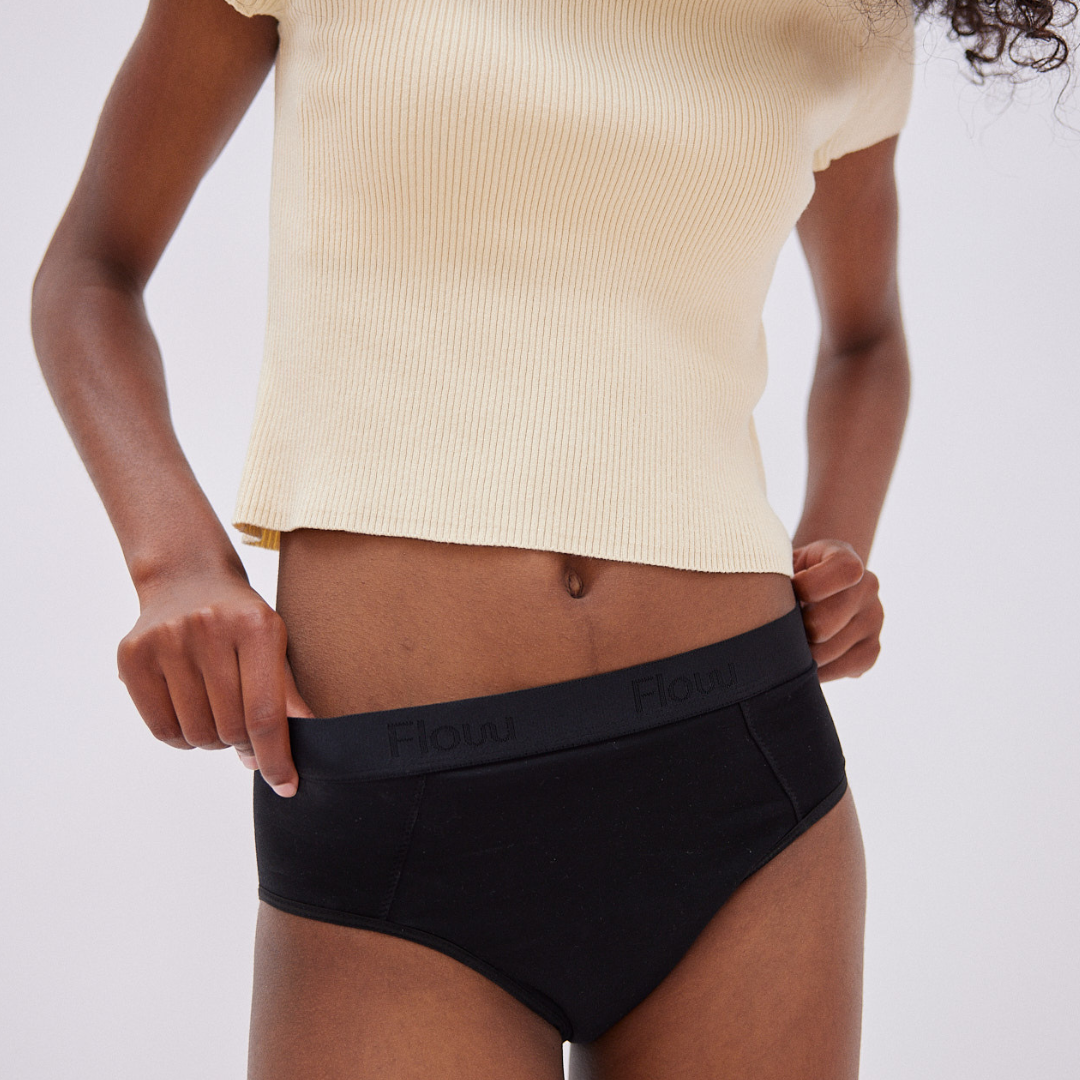
Maybe you've already bought a little menstrual kit . Maybe you've read one of the many good books about the body together. Maybe pads, tampons, cups or menstrual panties have been lying around, ready for curious questions. And maybe there have been small, intimate moments where you've talked about what's going to happen when it happens.
In some cultures, menarche is marked with big parties. In contrast to the period shame many of us grew up with in the 90s and 00s, the desire to celebrate and mark can be great. Total ✨ period positivity ✨ – maybe even with a full pass to Tivoli.
But here know your crowd is crucial. Because perhaps the big selection is mostly our need – and not the young person's. Maybe the most important thing is instead peace, security and time to land in the new. Teacups on the bed and space to feel for. Ask them. Also once more on the day it happens.
Regardless of the form , a few loving, thoughtful words in a card can make a big difference. Words that can be read on their own terms – and brought back up when needed. Words that say: You are not alone.
What kind of atmosphere around menstruation do you want to give your child?
When you set out to write the right words, your own memories and experiences will probably come to mind. The good ones – and the less good ones. And perhaps also the ones we would rather not pass on.
We are a generation that grew up with period shame. With the need to hide any indication that our bodies are menstruating. Fortunately, the next generation doesn't have to inherit that attitude. Language, knowledge, and openness around the cycle have shifted.
The question is: What do you want to pass on?
Should menstruation be something practical? Something biological? Something emotional? Something to be proud of, tired of, relieved about – or completely neutral about?
There can also be great relief in letting the child know that they don't have to think it's exciting or special. That there will be periods when you feel ✨ empowered ✨ - and others when you feel run over by a freight train. Both can coexist. And both are completely normal.
How much do you need to know in advance?
As a parent, it can be easy to over-explain in an attempt to prepare and be gentle, I know that all too well. But the truth is that menstruation and cycles vary from body to body – and even from cycle to cycle, from decade to decade. After menarche, it can take 1–1.5 years for your cycle to become regular.
Menstruation is not something they have to master in advance but learn along the way. Menarche is not an achievement. The body can now do something new – like the beating of the heart – without you having control over it.
It can be a gift to let the child know that they are facing many “firsts.” And that we never stop having them. Even those of us with +25 years of experience can still be surprised by our bodies.
What they can be sure of is that you are right behind them.
And then an important point: All young, soon-to-be menstruating women should know that their period is coming. At Flow, we also meet those who have never talked to their parents or other caregivers about menstruation. Imagine the shock of suddenly seeing blood in your underwear – perhaps with pain – without any idea what it is. It shouldn't be like that.
Good phrases to pass on to new menstruating women
Maybe you have a mantra you would like to pass on. A phrase that can be repeated and provide peace in the face of the unknown.
It could be sentences like:
Your body is not wrong. It's just going through something new.
And you shouldn't rush to understand it all.
There is no one right way to have your period.
You're welcome to take it as it comes.
If you get in doubt, curious, or tired of it all, I'm here.
Even when you don't know what to ask.
You shouldn't be able to figure it out alone.
And you must always come to me.
Menstruation can feel like many things –
But it shouldn't be painful. And it's always okay to ask for help.
Half of us menstruate.
There is no feeling or thought that has not been felt before.
You are never alone.
Many have had a lot to say about menstruation over time – often out of ignorance and a need for control. But menstruation is simply the result of a biological process in the body. Not something anyone needs to say anything about.
You are welcome to change your mind. Change your needs. Try things out. The only one who knows what is right for you is you.
Permission to be whole oneself
You may not have one golden phrase to write in the card. And that's okay. We all have changing truths, and there's hardly one thing you can write or say that will define the experience of your first period.
Instead, you can grant permissions.
Permission to forget that you are on your period.
To ask again and again.
To want to talk a lot – or not at all.
To think it's boring.
To make plans and suddenly not feel like doing any of them.
For cravings, rest, celebration and silence.
To change your mind about what you need.
Let them know that the body is now transitioning into a new rhythm, it has an approximately 28-day cycle, where the change in hormones will affect mood, appetite, energy as well as emotions. It is okay to be confused in this process. It may feel like nothing is as it used to be, but as they become more experienced they will be able to face themselves with greater gentleness and understanding.
The quiet witness
Menarche doesn't mean you're an adult. But you are. You've been through it before. And if something new arises, you're ready to explore it with them – or just stand by, without solutions and without words.
Let them know that you are their quiet witness. You have your lived experience to share, even if theirs will be different. You are now entering into a community with millions and billions of people who, no matter where they come from, what language they speak, where they live, have their cycle in common.
Lots of luck – from one parent to another.