
Sleep and the cycle: How your sleep changes throughout your menstrual cycle
Written by: Cathrine Widunok Wichmand
More than two out of three women experience poor sleep during the luteal phase and during their period.
It's not that strange. Our sleep is greatly influenced by hormones, and if you have a cycle, you also have a number of Hormonal fluctuations throughout the cycle affect the brain, nervous system and body temperature regulation. All factors are important for good sleep.
In this article, I will take you through how sleep typically changes during the different phases of the menstrual cycle, and what research says about the connection between hormones and sleep.
Sleep well (after you've read the article) 🌙
👉 Read 7 good and concrete tips for better sleep.

Overview: Sleep through the phases of the menstrual cycle
The menstrual cycle is divided into two real phases: the follicular phase and the luteal phase - but with two distinct milestones that mark the transition between the two: your period and your ovulation.
Your sleep quality varies with changes in estrogen and progesterone, especially throughout the four phases.
👉 You can delve into the four phases of the cycle and the four seasons in the article here.
Sleep during menstruation
During menstruation, both estrogen and progesterone are at their lowest levels. This can lead to sleep experiences such as:
-
Fatigue, but easier sleep
-
More nocturnal awakenings
-
Disturbances due to pain, cramps or headaches
Prostaglandins, which trigger menstrual cramps, can activate the body's stress response and disrupt sleep. Studies show that pain—even when it doesn't fully wake us up—reduces the amount of deep sleep.
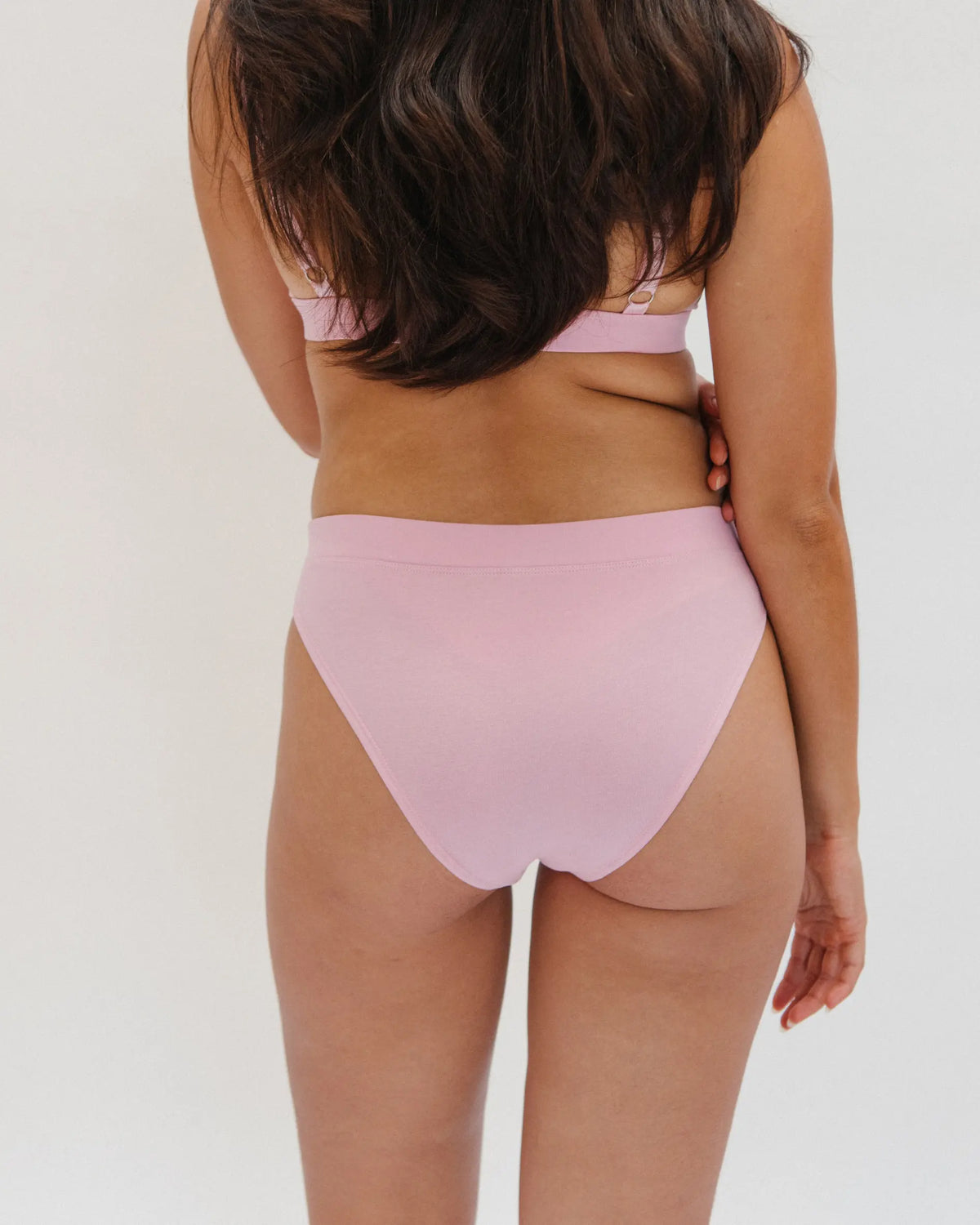
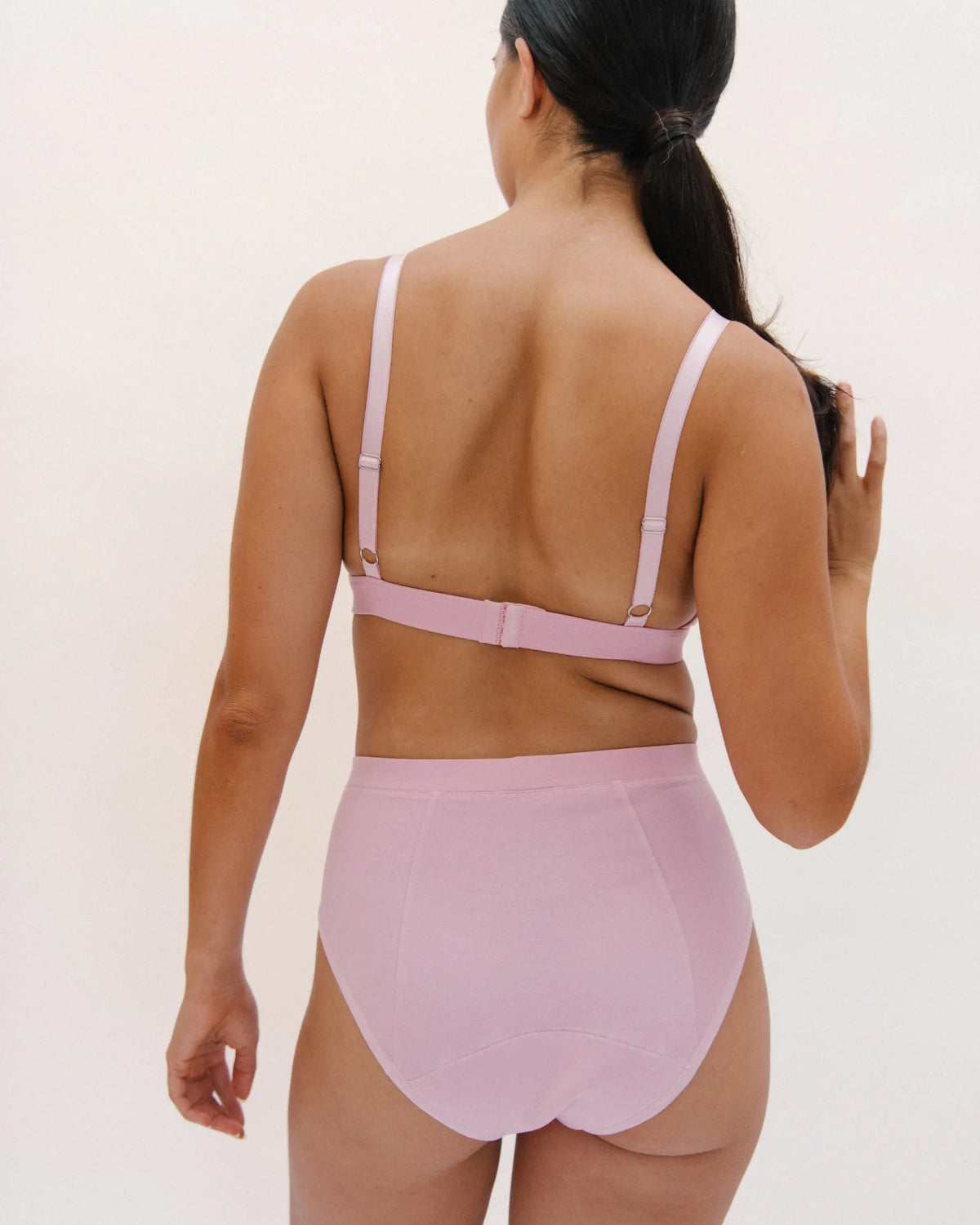
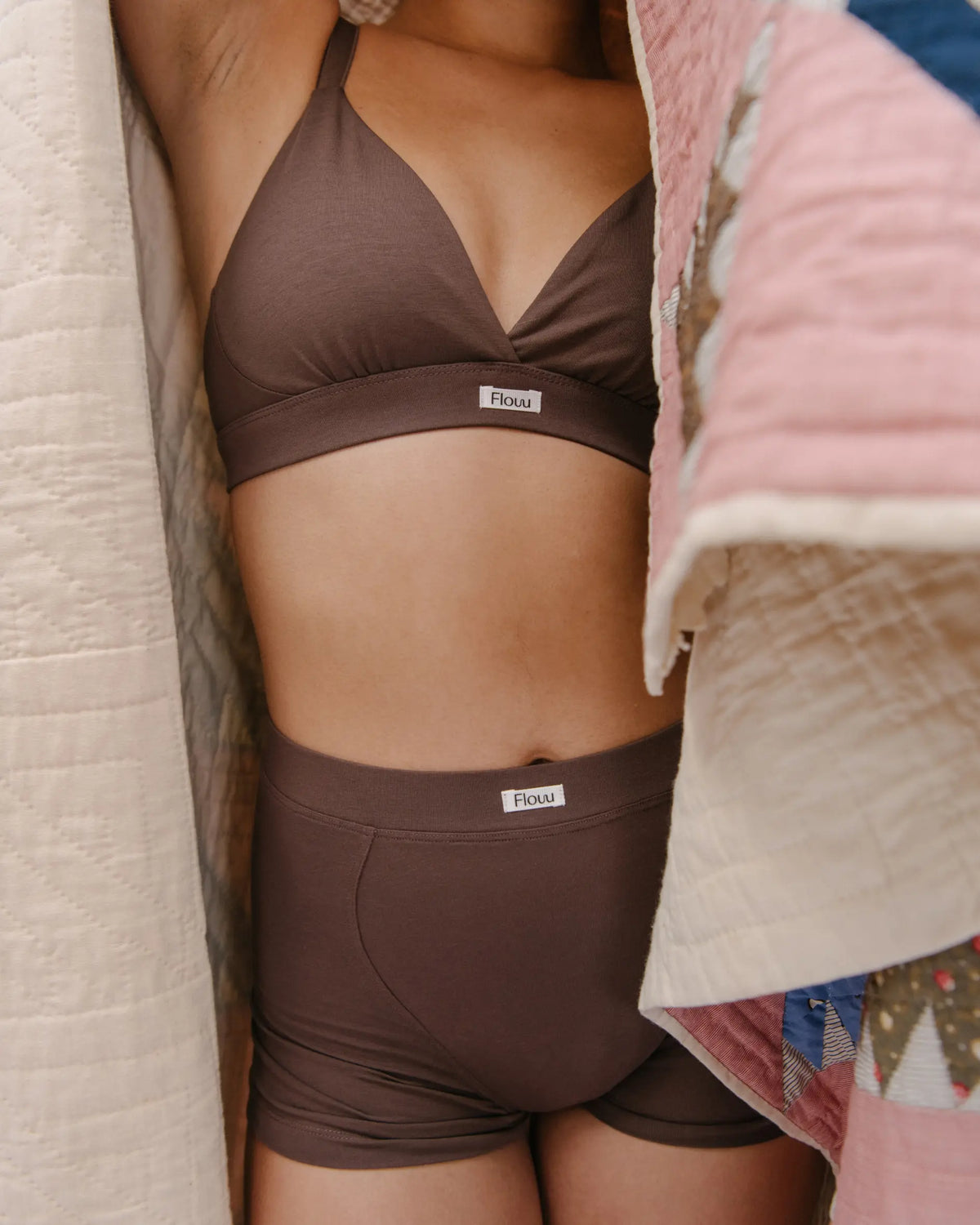
Sleep can also be disrupted by the simple, basic fear many of us have when we sleep: What if we bleed? If I could take that fear away from you, I really would - it's not hormonally driven but probably more structural and deep within us (I know many people love our Period Flow Shorts at night - for heavy flow).
👉 Pernille writes: "Best night pants - I've been menstruating for 25 years and have never slept better at night during my period. They protect 100% and are super comfortable." and gives Period Flow Shorts ⭐️ ⭐️ ⭐️ ⭐️ ⭐️
Follicular Phase: When Sleep Often Improves
The follicular phase starts after your period and lasts until ovulation. This is when estrogen levels gradually start to rise. For you, this can mean:
-
Easier falling asleep
-
More stable sleep
-
Increased energy and recovery
Estrogen supports the production of serotonin and melatonin, both of which are important for sleep quality and circadian rhythm. Many people experience this phase as the period of their cycle when they sleep best.
Sleep around ovulation
At ovulation, estrogen levels peak while progesterone is still relatively low. This can mean:
-
Good sleep quality
-
Falling asleep faster
-
Fewer awakenings
However, some women experience mild restlessness or shorter sleep in the days around ovulation, possibly due to increased energy and activation in the nervous system or due to the slightly increased body temperature. Your sex drive may be increased around ovulation - and sex can provide better and deeper sleep if that is a solution or option for you.
Personally, I experience my most intense and vivid dreams during this phase, and it can also be disturbing.
The Luteal Phase: Why Sleep Often Gets Worse
The luteal phase starts after ovulation and lasts until the first day of your period. This is where progesterone first rises – and then drops sharply just before your period. This can mean for you:
-
Difficulty falling asleep
-
Lighter, more fragmented sleep
-
More early morning awakenings
-
Increased need for sleep, but lower sleep quality
Progesterone has a calming effect, but it also increases body temperature. An elevated core temperature makes it harder to achieve deep sleep. At the same time, both progesterone and estrogen fall towards menstruation, which can reduce melatonin production.
Women with PMS or PMDD often experience particularly significant sleep disturbances during this phase - it is important to say here that you should contact your doctor if you experience sleep disturbances that continuously bother you.
👉 Read more about PMS here
What can be done about cycle-related sleep problems?
Historically, sleep research, like much other medical research, has been based on men, so there is still much to discover and learn about the body's changes and how they affect sleep during a cycle.
👉 Read 7 tips for good sleep hygiene here.
Until then, you and I must find our own ways to sleep better during our cycle, and fortunately, there are good things we can do, even if we can't eliminate hormonal fluctuations. Have you tried any of the following good things?
🌙 Overall, it can be nice to just know and lean into the fact that your sleep quality is not constant throughout your cycle. It's natural for it to fluctuate - and if you can relax a little more into that fact, there might be a little less room to ruminate.
🌙 Can you lower your body temperature at night? Consider a cool duvet or open window. The optimal temperature in a bedroom is 16-18℃. This is relatively cool compared to a typical room temperature of 21℃.
🌙 Many people also benefit from magnesium - as a dietary supplement or our Calming Cream , a nourishing body lotion with chamomile and magnesium, which is known to relieve anxiety and reduce discomfort. You can apply it every day to your entire body or just to your calves or arms, where you may feel restless.
🌙 Make sure to prioritize recovery, especially during your luteal phase - if you have very active days when your body is slightly in deficit, it can cause more restlessness at night.
🌙 Think about your caffeine intake - maybe it should be a little lower on those days of your cycle when sleep is particularly challenged?
🌙 Can good, repetitive rituals help your body and mind understand that it's time to sleep? Maybe a cup of herbal tea (rooibos or pure herbal tea is caffeine-free), 20 minutes of reading in bed, or maybe some soothing oils on your wrist can set the right mood for sleep?
If you have persistent or severe sleep problems, you should talk to a doctor – especially if you suspect PMS or PMDD, which 3-8% of women of childbearing age suffer from.
Sleep really well 🌙
Sources:
Baker, FC, & Driver, HS (2007). Circadian rhythms, sleep, and the menstrual cycle. Sleep Medicine. Baker, FC et al. (2001). Menstrual cycle effects on sleep. Sleep. Shechter, A. et al. (2010). Effects of estrogen on sleep architecture. Journal of Clinical Endocrinology & Metabolism. Parry, BL et al. (2008). Sleep disturbances in premenstrual dysphoric disorder. Sleep Medicine Reviews.